T minus 00:08:00 OUTWARD
Four generations of leaving Earth orbit
Interplanetary missions have followed a ladder of ambition, and each rung demanded a capability the previous one did not need. Fly past. Go into orbit. Land. Come back with something.
1962
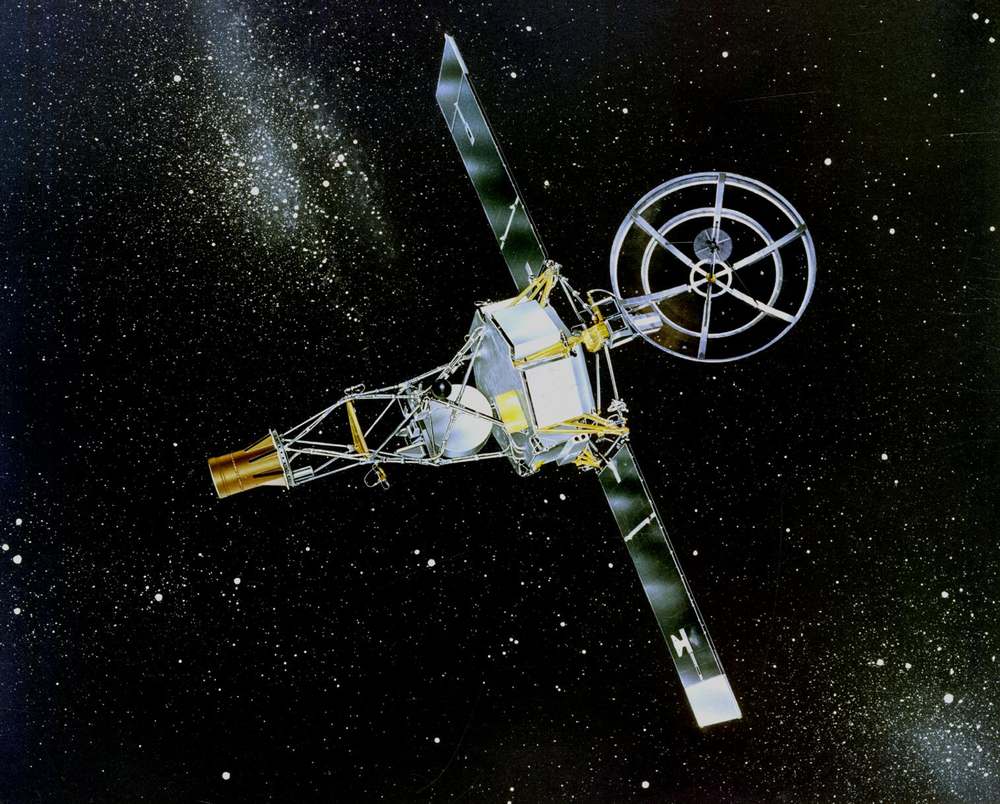
the first flybyMariner 2success
The first spacecraft to reach another planet, passing Venus at about 35,000 km. No orbit insertion, no landing: get there, take data, continue outward forever. A flyby buys the mission designer a great deal: no braking manoeuvre, no propellant carried for capture, and a much looser arrival accuracy than orbit insertion would demand. What it costs is time at the target, measured in hours.
It flew weeks after Mariner 1 was destroyed by a defect in its guidance equations, an early lesson in how small a software error can be and how total its effect. Building spacecraft in pairs was the era’s answer to exactly that risk.
1970 – 75
the first landingsVenerapartial
Venera 7 returns data from the surface of Venus in 1970, and Venera 9 sends the first picture from another planet’s surface in 1975, surviving roughly an hour at 470 °C and ninety atmospheres.
That environment is beyond long survival for any era’s electronics, so the design answer was a pressure vessel, pre-chilling before entry, and an accepted lifetime of minutes. When the environment cannot be beaten, survival time becomes a design parameter.
1976
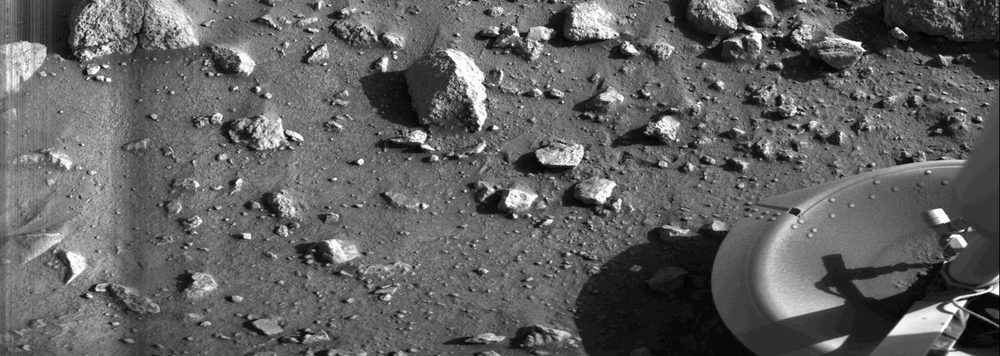
Vikingsuccess
Two orbiters and two landers at Mars, operating for years rather than minutes. Viking 1’s lander kept returning data for more than six years. Entry, descent and landing becomes an engineering discipline of its own: aeroshell, parachute and terminal descent engines, all sequenced without help from Earth, because the signal delay makes intervention impossible.
The chain is single-use events that must fire in order, with no rehearsal and no second attempt at any link. Viking’s aeroshell, parachute and throttled terminal descent are still the recognisable skeleton of every Mars landing.
1977
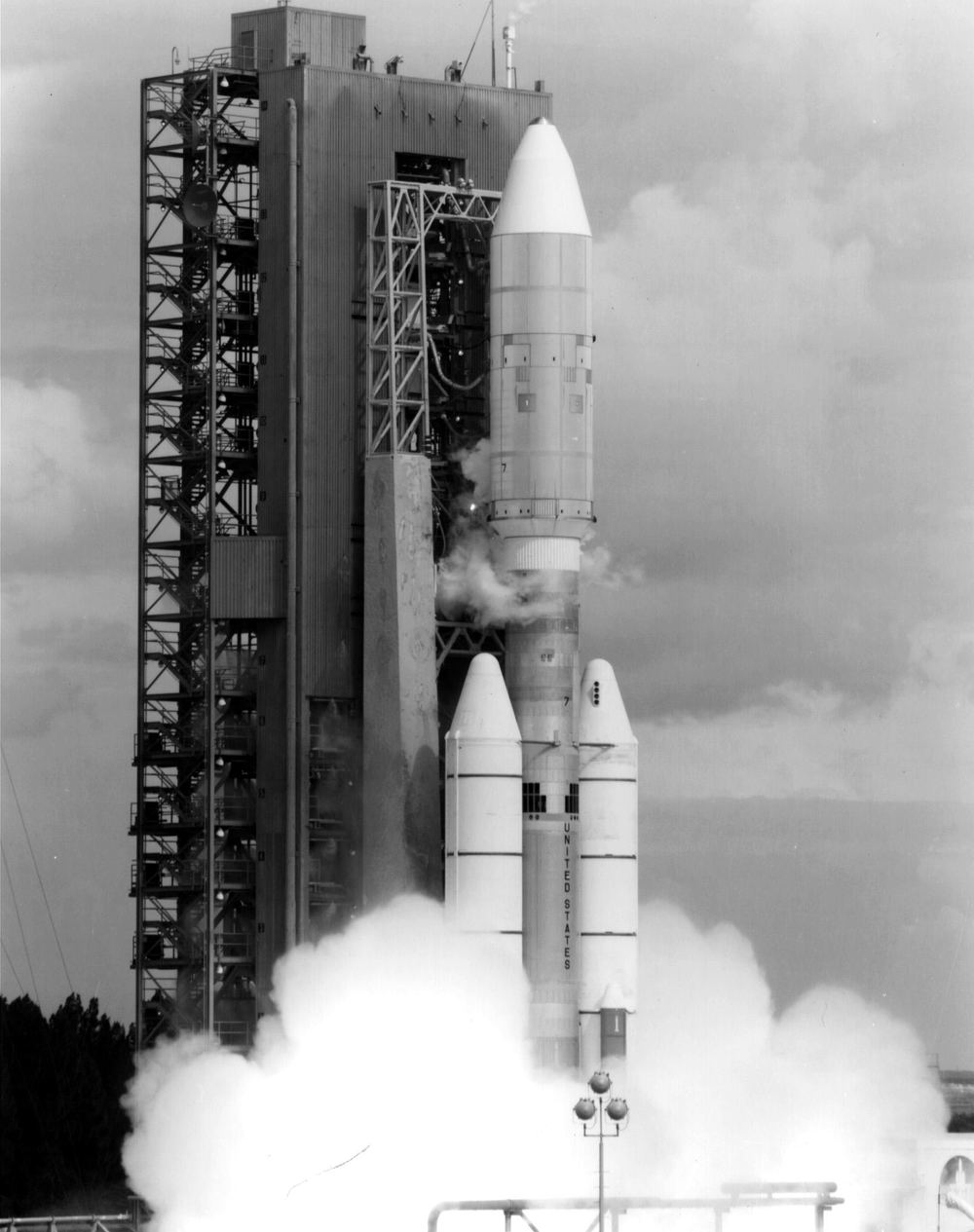
Voyagersuccess
Two spacecraft use a planetary alignment that recurs every 175 years to reach four outer planets. Gravity assist stops being a trick and becomes standard mission design.
A gravity assist borrows energy from the planet’s orbital motion, and the alignment let each encounter pay for the next. Launch in 1977 or wait 175 years is a forcing function no programme review can argue with.
1989 – 2003
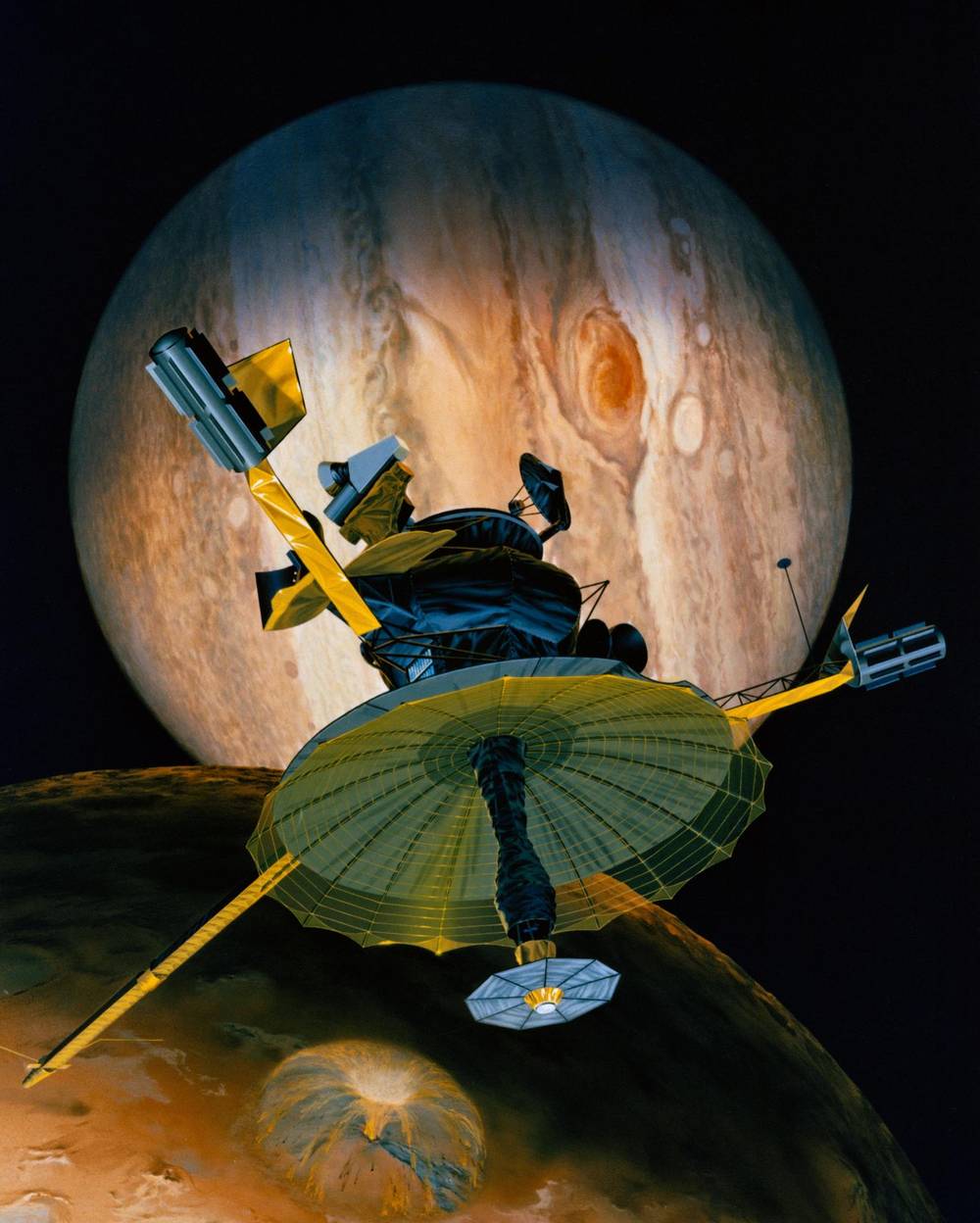
Galileopartial
Orbits Jupiter for eight years and drops a probe into its atmosphere, having flown most of the mission with its main antenna stuck shut. A study in operating a crippled spacecraft.
The recovery was software. New coding schemes, on-board compression and arrayed ground antennas clawed back a usable fraction of the lost bandwidth, and the ability to rewrite a spacecraft in flight turned the failure from fatal into expensive.
1997 – 2017
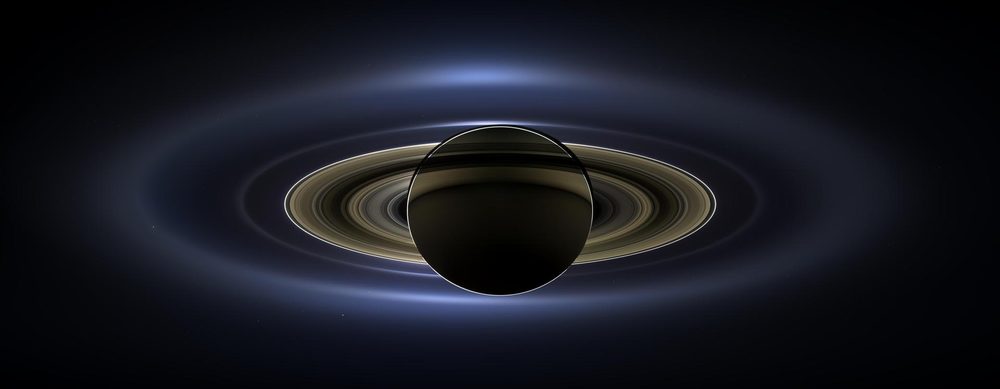
Cassini–Huygenssuccess
Thirteen years in orbit at Saturn, and a European lander on Titan, still the most distant landing achieved. Ends by being deliberately destroyed to protect a moon it found might be habitable.
The disposal was planetary protection executed as trajectory design, chosen once an ocean that might be habitable made an uncontrolled derelict unacceptable. End of mission is planned while the propellant to choose it still exists.
2003 – 2010
Hayabusapartial
Reaches asteroid Itokawa, touches down twice, and returns to Earth with grains of it, despite losing engines, reaction wheels and its lander. Sample return from a small body demonstrated by a mission that barely survived.
It came home on recombination, two half-failed ion engines cross-wired into one working unit through a bypass circuit designed in before launch. Margin can hide in architecture, if subsystems are built so they can be recombined.
2014
Rosetta and Philaepartial
Orbits a comet and lands on it. Philae’s harpoons fail, it bounces twice and ends up in shadow, a reminder that touching an object with almost no gravity is a proximity problem, not a landing problem.
At a comet’s gravity, touchdown is really docking with an uncooperative rotating body, and the anchoring hardware was the single point that failed. The orbiter’s years of proximity operations around an outgassing, irregular nucleus were the quieter achievement.
2018 – 23
OSIRIS-REx and Hayabusa2success
Two sample-return missions operate around asteroids for years, navigating relative to a body whose shape and gravity field they had to map on arrival, and return material to Earth.
Neither body had a usable map until arrival, so each mission surveyed, estimated the gravity field and assessed hazards on site, building its own operating environment. Navigating relative to a poorly known body is the discipline shared with satellite servicing.
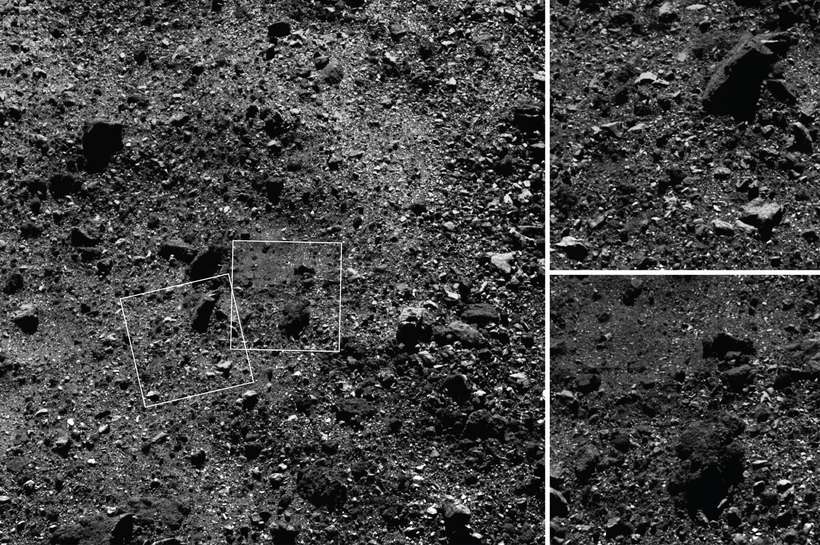
The through-line matters here: the moment a mission stops flying past and starts approaching, it becomes a relative navigation problem. Rosetta and OSIRIS-REx were solving very nearly the same problem as a servicing vehicle in geostationary orbit, with worse light and a longer signal delay.