Final Proximity Space Systems

Let’s Talk Space

10Chronology of flyby missions

One pass, no second
attempt: the Flyby missions.

Most of what we know about the outer solar system was gathered by spacecraft that could not stop. They arrived faster than escape velocity, worked for a few hours, and left.

T minus 00:10:00   WHY FLY PAST

The cheapest way to see something

Going into orbit around another body costs a large braking burn, and that propellant has to be carried the whole way. A flyby costs nothing extra: the spacecraft is already on a trajectory that passes the target, and it simply keeps going. That is the whole economic argument, and it is why every body in the solar system was photographed from a flyby before it was ever orbited.

The price is that you get one attempt. The encounter cannot be repeated, extended or rescheduled, and by the time the data reaches Earth the spacecraft is already millions of kilometres past.

28encounters listed
28success
0partial
0failed
100%fully successful

T minus 00:09:00   FIRST LOOKS

First reconnaissance

The first two decades of planetary exploration were almost entirely flybys, because nothing else was affordable. Each one turned a point of light into a place.

Dec 1962

Venus

Mariner 2success

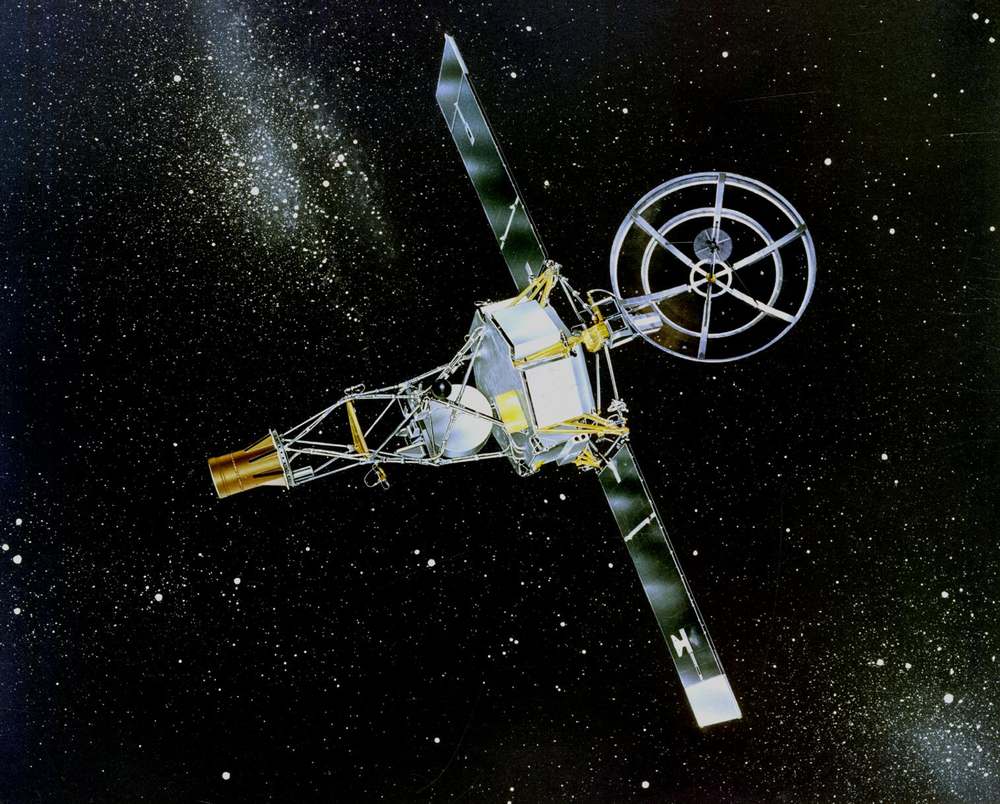
The first spacecraft to reach another planet, passing about 35,000 km from Venus. It carried no camera. Its radiometers established that the surface was extremely hot, ending decades of speculation that Venus might be temperate under its clouds.

The encounter lasted hours; the demonstration was the cruise. Months of attitude control, thermal management and telemetry with no precedent established that a spacecraft could survive interplanetary space at all.
NSSDC, Mariner 2

Mariner 2, the first successful interplanetary spacecraft. An artist rendering: it carried no camera, and it is outbound forever. NASA/JPL, PIA04594.

Jul 1965

Mars

Mariner 4success

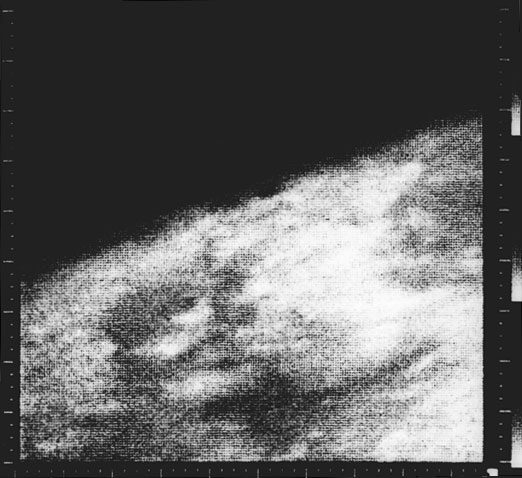
Twenty-one photographs, taken at 10,000 km, covering about one per cent of the surface. They showed craters and no canals, and the radio occultation measured an atmosphere far thinner than expected. It reset what a Mars lander would have to survive.

Radio occultation measures an atmosphere almost for free, using the carrier signal itself as the instrument as the spacecraft passes behind the planet. One cheap measurement invalidated every Mars lander design then on paper.
NASA Science, Mariner 4

The first close-up image of Mars, 15 July 1965, reproduced as the raw returned data. NASA/JPL-Caltech.

Dec 1973

Jupiter

Pioneer 10success

The first spacecraft through the asteroid belt and the first to Jupiter, passing 130,000 km above the cloud tops. It measured a radiation environment far more intense than predicted, which every later mission had to be designed against.

Flying an instrumented pathfinder ahead of the expensive missions is deliberate design practice. Pioneer’s radiation measurements fed directly into Voyager’s shielding and part selection, which is a large part of why Voyager survived.
NASA Science, Pioneer 10

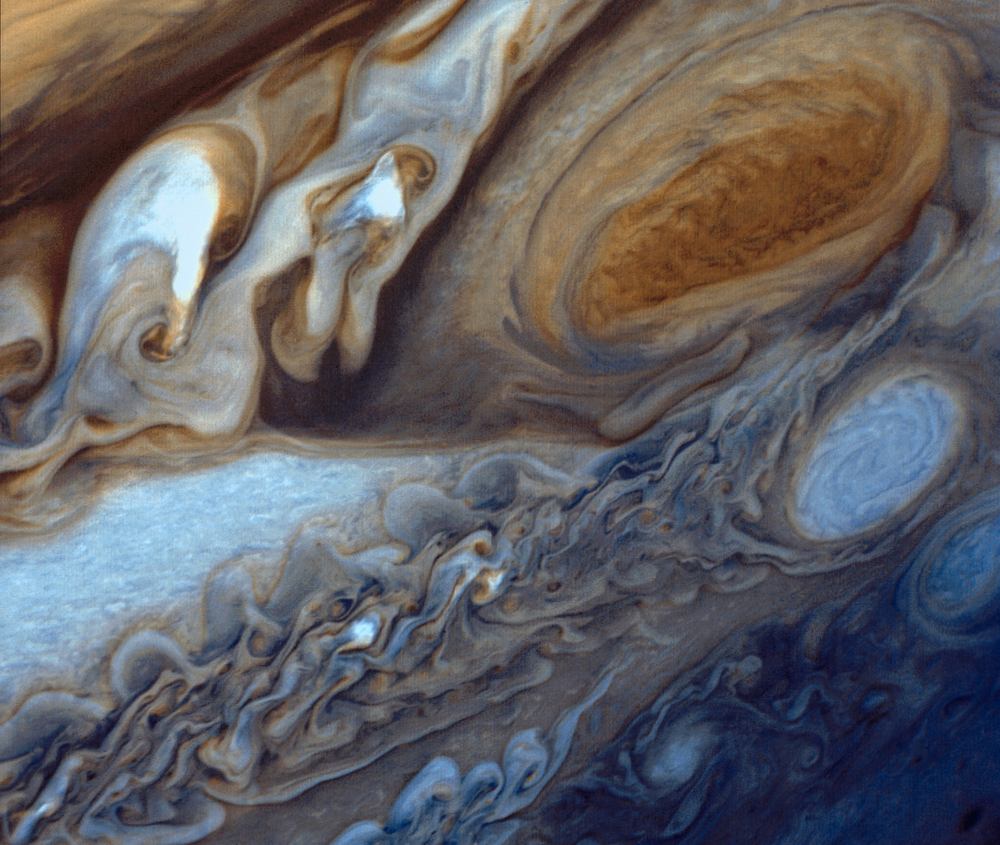
The Great Red Spot from Voyager 1. NASA/JPL, PIA01384.

Dec 1974

Jupiter then Saturn

Pioneer 11success

Used Jupiter to bend its trajectory across the solar system to Saturn, arriving in 1979. The first use of a gravity assist to reach a second outer planet, and a scouting run that found a safe path through the ring plane for Voyager to follow.

A gravity assist is a momentum exchange with the planet, buying trajectory change with navigation accuracy instead of propellant. The price is a fixed geometry, since the assist dictates where you can go next and when.

NASA Science, Pioneer 11

Feb 1974

Venus then Mercury

Mariner 10success

The first mission to use gravity assist to reach another planet, and the first to visit two. It then found a resonant orbit that brought it back to Mercury twice more, so one spacecraft achieved three encounters. Solar pressure on the panels was used for attitude control when the thruster gas ran low.

The resonant return showed that encounter geometry can be designed to repeat, by matching the spacecraft period to a multiple of the planet’s. Using sunlight pressure on the solar panels as a backup attitude effector was improvised here and studied ever since.
NASA Science, Mariner 10

T minus 00:07:30   GRAND TOUR

Voyager, and the alignment that made it possible

A planetary alignment that recurs roughly every 175 years allowed a single launch to reach four outer planets. Missing it would have meant waiting until the 2150s.

Mar 1979

Jupiter

Voyager 1success

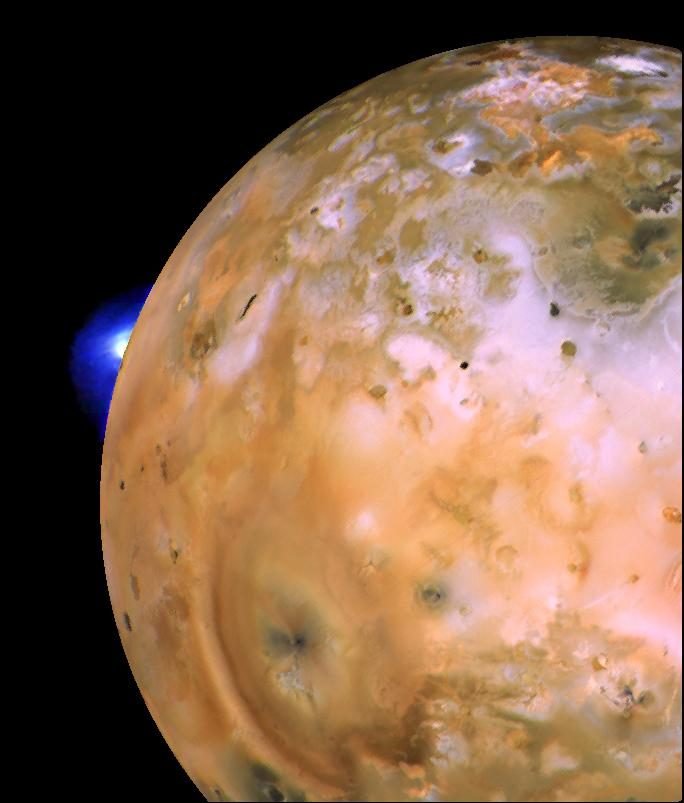
Discovered active volcanism on Io, the first found anywhere beyond Earth, and a thin ring around Jupiter. The volcanoes were noticed in a navigation image processed to bring out background stars.

The volcanoes were found in an image taken to fix the trajectory, not to do science. Optical navigation frames tied the spacecraft’s path down between planets, and instruments earning their mass twice over became a design habit.

NSSDC, Voyager 1

Io with the Loki plume standing off the limb, found in a navigation frame. NASA/JPL/USGS, PIA00010.

Nov 1980

Saturn and Titan

Voyager 1success

A close pass of Titan was judged more valuable than continuing to Uranus, so the trajectory was deliberately spent on it. It bent Voyager 1 up and out of the ecliptic, ending its planetary mission and starting its interstellar one.

A trajectory is a budget that can be spent only once. The Titan pass bought data no other instrument could reach, at the cost of every planet Voyager 1 would never see, which makes encounter selection a resource allocation decision.

NASA Science, Voyager 1

Aug 1981

Saturn

Voyager 2success

Freed by Voyager 1 having taken the Titan encounter, Voyager 2 could keep the Grand Tour trajectory. Its scan platform seized shortly after closest approach and was recovered by ground analysis of the lubricant behaviour.

The seized platform was diagnosed from telemetry and from identical gearboxes run to failure on the ground. Duplicate hardware on Earth is what turns a fault a billion kilometres away into a maintenance problem.

NSSDC, Voyager 2

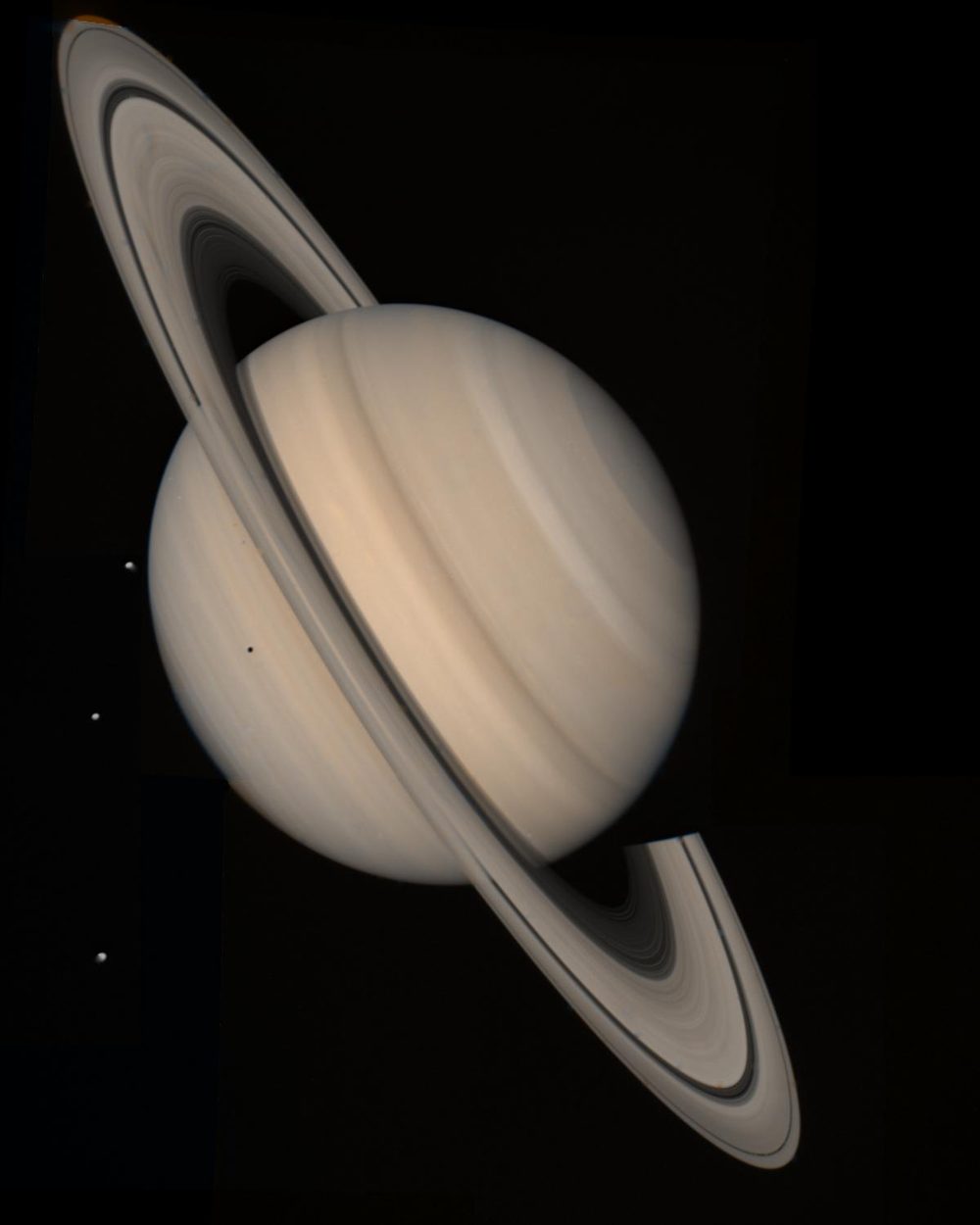
Saturn from Voyager 2, August 1981, from 21 million km. NASA/JPL, PIA01364.

Jan 1986

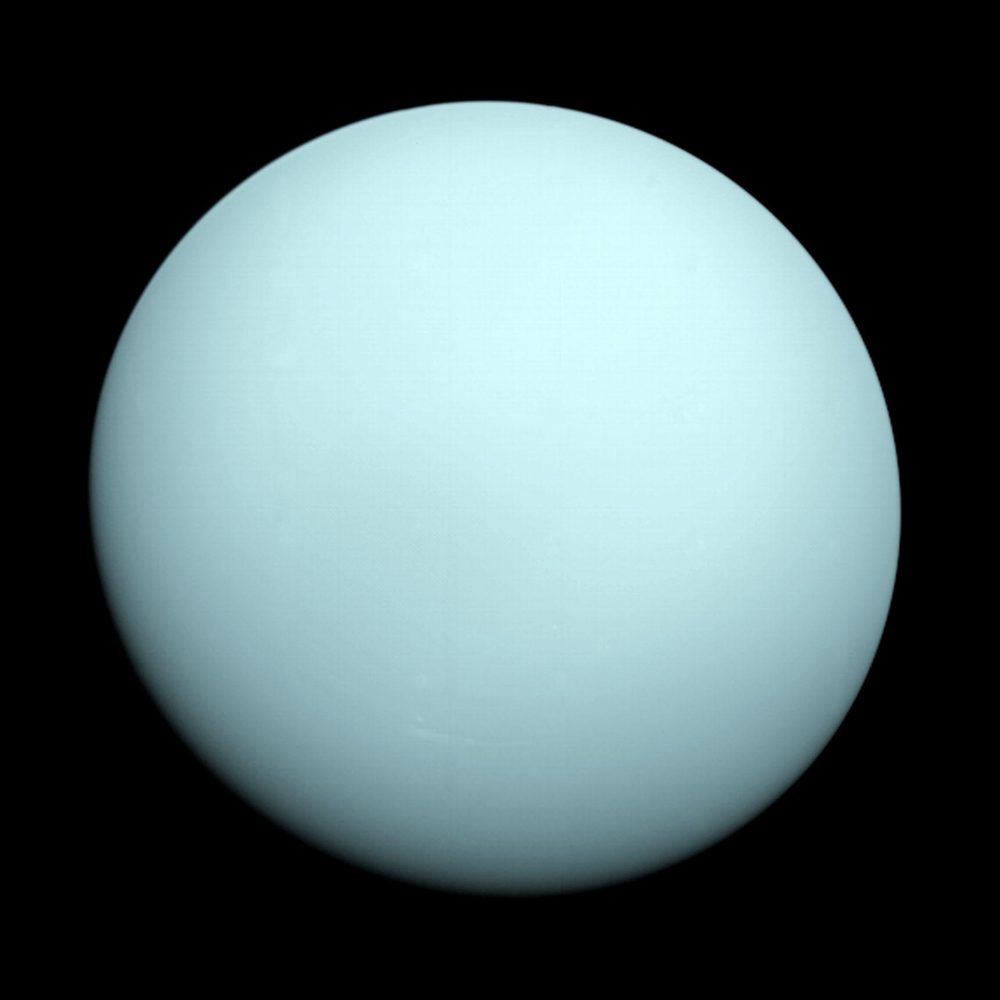
Uranus

Voyager 2success

The only visit ever made. It arrived to find the planet tipped on its side, a magnetic field offset and tilted from the rotation axis, and ten new moons. Image smear at that light level was solved by rolling the entire spacecraft to track the target during exposures.

Light at Uranus is around four hundred times weaker than at Earth, so exposures lengthen and any pointing drift smears the frame. Image motion compensation by rolling the whole spacecraft was invented mid-mission and uplinked.

NASA Science, Voyager 2

Uranus, January 1986. The only visit ever made. NASA/JPL-Caltech, PIA18182.

Aug 1989

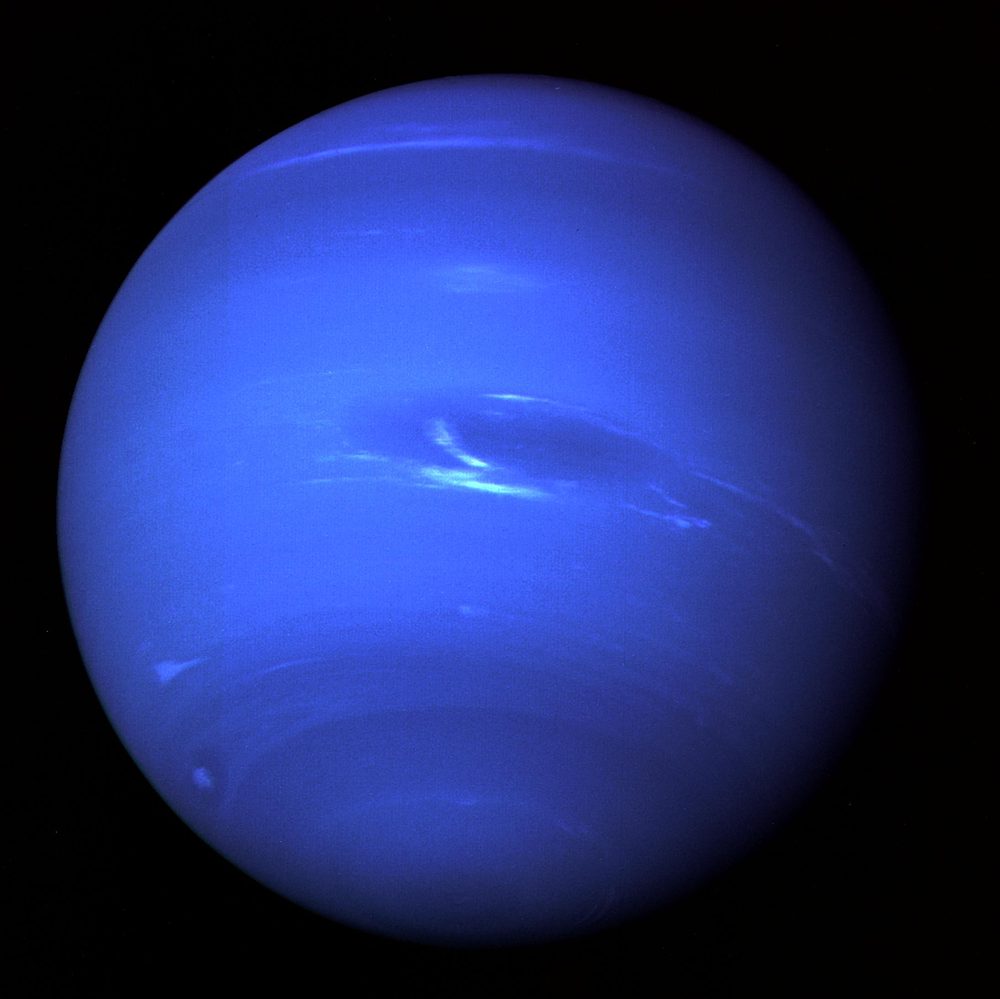
Neptune

Voyager 2success

The last planetary encounter, twelve years after launch, arriving within about a hundred seconds of the predicted time. It found winds of 2,000 km/h and geysers on Triton. Nothing has been back.

Arriving within about a hundred seconds after twelve years is a statement about radiometric tracking, ephemeris work and optical navigation rather than luck. Navigation accuracy is what turned the Grand Tour from a concept into four encounters.

NSSDC, Voyager 2

Neptune with the Great Dark Spot, days before closest approach, 1989. NASA/JPL, PIA01492.

2012 and 2018

interstellar space

Voyager 1 and 2success

Both crossed the heliopause, Voyager 1 first, and both are still returning data on a few watts. They remain the only spacecraft to have made direct measurements of the interstellar medium.

The longevity was engineered rather than lucky. Declining RTG power is predictable to the watt, and loads are shed in a planned order stretching across decades, so end of life is a phase to be designed, not an event to be suffered.

NASA Science, Voyager

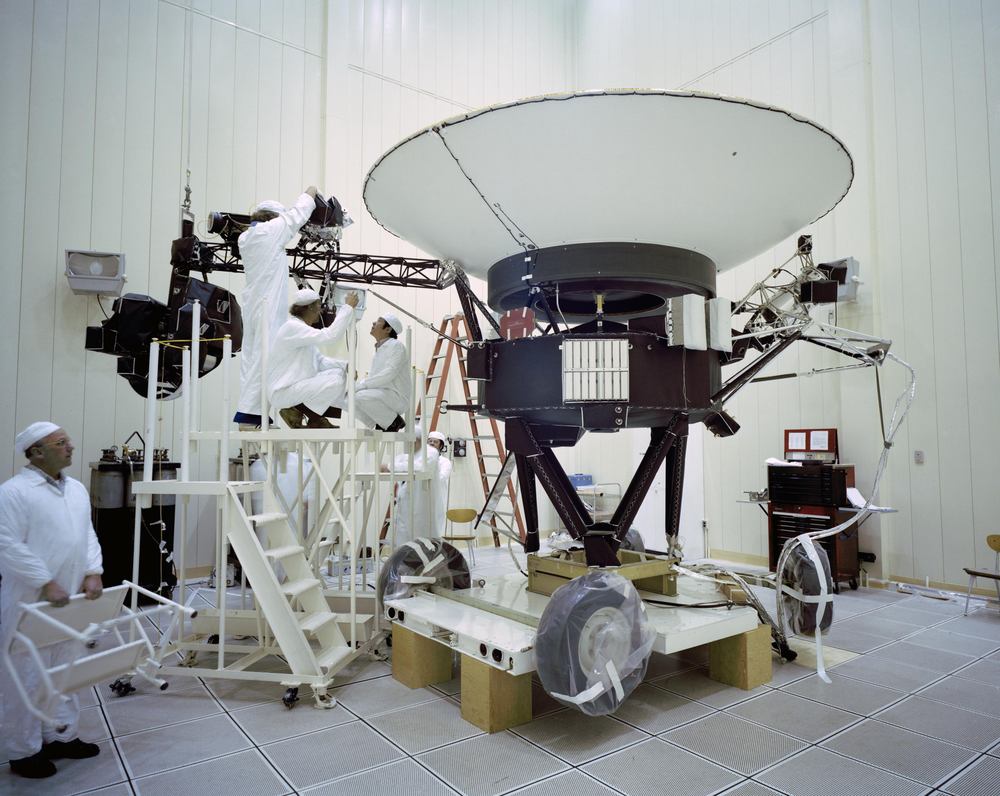
Voyager 2 in a JPL cleanroom, March 1977, engineers at the science boom. NASA/JPL-Caltech, PIA21736.

T minus 00:06:00   SMALL BODIES

Comets and asteroids

Small bodies are almost always met by flyby, because they are numerous, individually low-value as targets, and reachable in passing.

Mar 1986

comet Halley

Giottosuccess

Europe flew within 600 km of the nucleus through a dust environment expected to be lethal. It was struck hard enough to be knocked off its spin axis and lost its camera, but survived, and was later retargeted to a second comet.

The dust protection was a two-sheet bumper shield, a thin front plate to vaporise the grain and a stouter rear plate to catch the spray. The same principle, the Whipple shield, protects the ISS today.

ESA, Giotto

Oct 1991

asteroid Gaspra

Galileosuccess

The first close look at an asteroid, taken on the way to Jupiter. The main antenna had failed to deploy, so the images came back slowly through the low gain antenna over months.

The stuck antenna made downlink the scarcest resource on the mission, and the response was on-board compression and ruthless selection of what to send. Every deep-space mission since has reused those techniques.

NSSDC, Galileo

Aug 1993

asteroid Ida

Galileosuccess

Found that Ida has a moon, Dactyl, the first confirmed satellite of an asteroid. It was discovered in data returned long after the encounter, because the downlink was so constrained.

Dactyl turned up in frames searched on the ground months after the encounter, because the recorder held far more than the link could return. With a constrained downlink, what comes back first is a decision, and discoveries can wait in the queue.

NASA Science, Galileo

Jun 1997

asteroid Mathilde

NEAR Shoemakersuccess

A flyby of a very dark, very low density body on the way to orbit Eros. Its density implied an interior that is substantially empty space, which changed thinking about what asteroids are made of.

The density came from watching Mathilde’s gravity deflect the spacecraft’s radio signal, a measurement needing no instrument beyond the transmitter. Mass from a flyby is one of the cheapest fundamental measurements in planetary science.

NASA Science, NEAR Shoemaker

Sep 2001

comet Borrelly

Deep Space 1success

A technology demonstrator flying an ion engine and autonomous navigation. It returned the best comet nucleus images to that date, on a mission whose star tracker had already failed and been worked around.

A technology demonstrator exists to take first-flight risk somewhere affordable, and the ion propulsion and autonomous navigation proven here went on to Dawn and later missions. Finishing the mission after losing the star tracker was an unplanned demonstration of its own.

NASA Science, Deep Space 1

Jan 2004

comet Wild 2

Stardustsuccess

Flew through the coma at 6 km/s collecting dust in aerogel, then returned the sample capsule to Earth in 2006. A flyby that brought material home without ever slowing down.

Aerogel decelerates a grain over millimetres instead of instantly, gently enough that the particle survives to be analysed. Capture at 6 km/s without melting the sample was the problem, and a material was the answer.

NASA Science, Stardust

Jul 2005

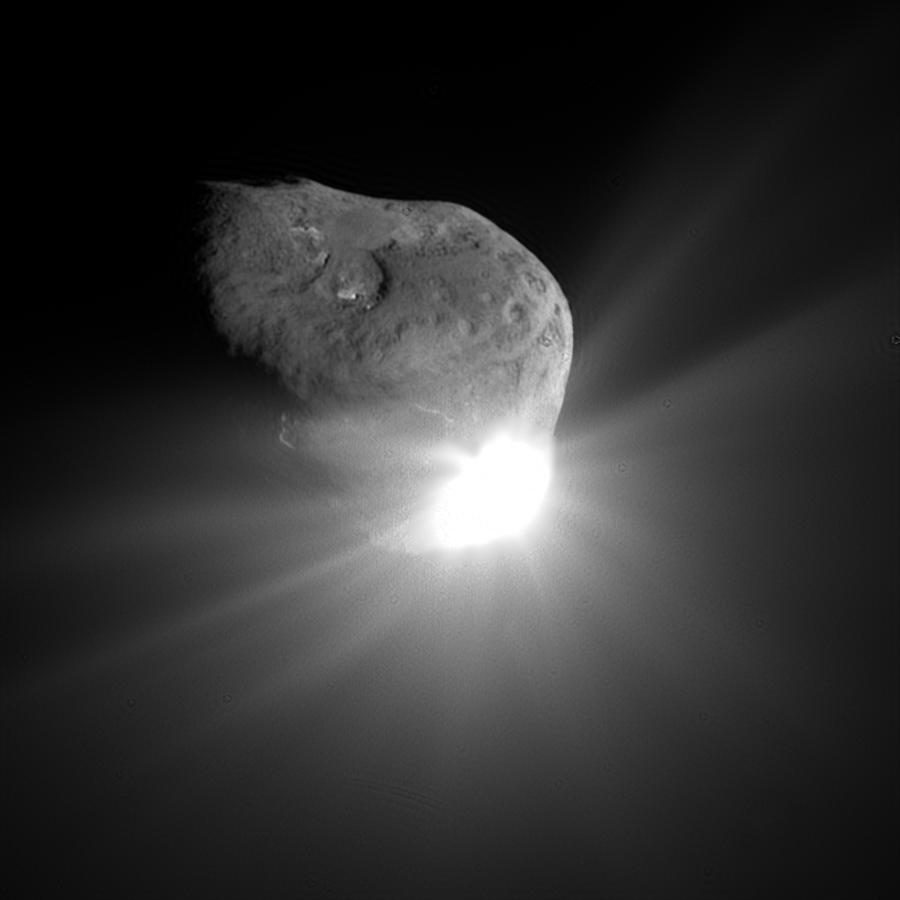
comet Tempel 1

Deep Impactsuccess

Released a 370 kg copper impactor into the path of the nucleus and observed the excavation from the flyby spacecraft. The impactor had to autonomously steer itself into a body it could barely see, at 10 km/s.

The impactor’s terminal guidance was fully autonomous, correcting its own course optically in the final minutes, because no human loop closes at that speed. DART flew essentially the same intercept problem seventeen years later.

NASA Science, Deep Impact

Comet Tempel 1, 67 seconds after the Deep Impact impactor struck. NASA/JPL-Caltech/UMD, PIA02137.

T minus 00:04:30   GETTING THERE

Flybys used as propulsion

Many flybys are not the point of the mission at all. They are how the mission reaches somewhere else, and the encounter is a bonus.

Feb 1992

Jupiter

Ulyssessuccess

Used Jupiter purely to throw itself out of the ecliptic and into a polar orbit around the Sun. No launch vehicle could have delivered that change directly. The science was the solar poles, and Jupiter was the lever.

Inclination is the most expensive orbital element to change, and a solar polar orbit was beyond any launcher’s direct capability. Some orbits can only be bought with a flyby.

NASA Science, Ulysses

1998 to 2000

Venus twice, Earth and Jupiter

Cassinisuccess

Four gravity assists over two years to reach Saturn. The Earth flyby drew public objection over the plutonium power source, and the trajectory was designed so that the spacecraft could not strike Earth even in the event of total failure.

The trajectory traded years of flight time for propellant no launcher could have carried. Biasing the Earth aim point so that a dead spacecraft misses the planet is now standard planetary protection practice for any flyby of home.

NSSDC, Cassini

Sep 2008 and Jul 2010

asteroids Steins and Lutetia

Rosettasuccess

Two asteroid encounters taken in passing on the way to comet Churyumov-Gerasimenko. Lutetia at 3,170 km remains one of the largest asteroids seen close up.

The asteroid encounters doubled as rehearsals, exercising the instruments, sequences and navigation on live targets before the encounter that mattered. Practising the hard thing on a cheap target is trajectory design doing risk reduction.

NSSDC, Rosetta

Oct 2013

Earth

Junosuccess

A gravity assist past its own launch planet, needed because no rocket could send that mass directly to Jupiter. The spacecraft entered safe mode during the pass and recovered on its own.

An Earth assist means launching away from your destination and returning past home two years later, faster. The safe mode entry during the pass showed why flyby sequences must tolerate the spacecraft protecting itself at the least convenient moment.

NASA Science, Juno

T minus 00:02:30   THE FAR EDGE

Pluto and beyond

The most distant encounters attempted, where the light delay is measured in hours and every sequence has to run without supervision.

Jul 2015

Pluto

New Horizonssuccess

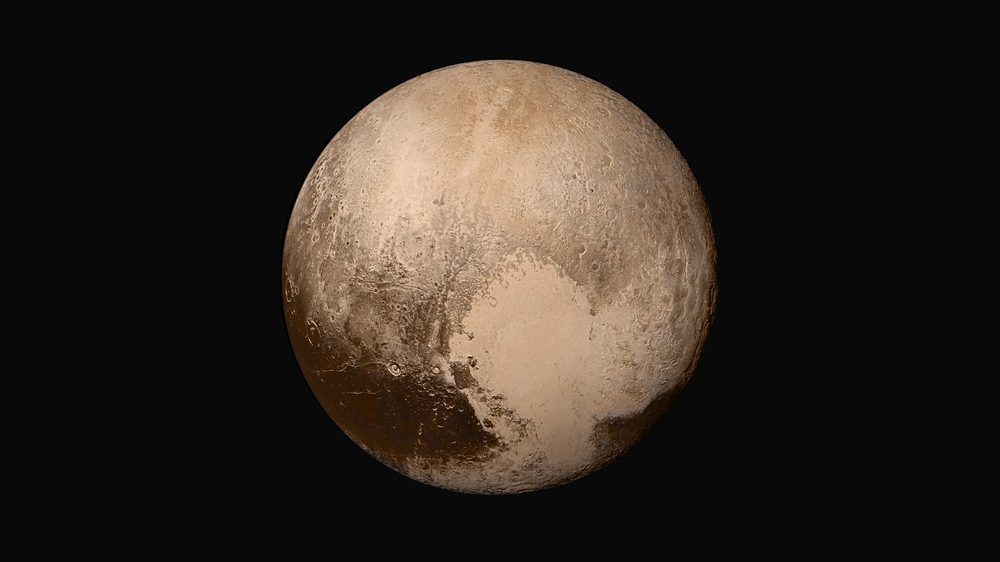
A nine-year cruise for a twenty-two hour encounter, passing 12,500 km from the surface at 14 km/s. The spacecraft could not observe and transmit at the same time, so it went silent through closest approach and the team waited for a single confirmation tone. Returning the data took sixteen months.

The high-gain antenna and the instruments point in different directions, so the spacecraft could observe or transmit, never both. Encounter design is scheduling under exactly that constraint, with the downlink sized by an RTG and five billion kilometres.

NSSDC, New Horizons

Pluto in true colour, July 2015. NASA/JHUAPL/SwRI, PIA19857.

Jan 2019

Arrokoth

New Horizonssuccess

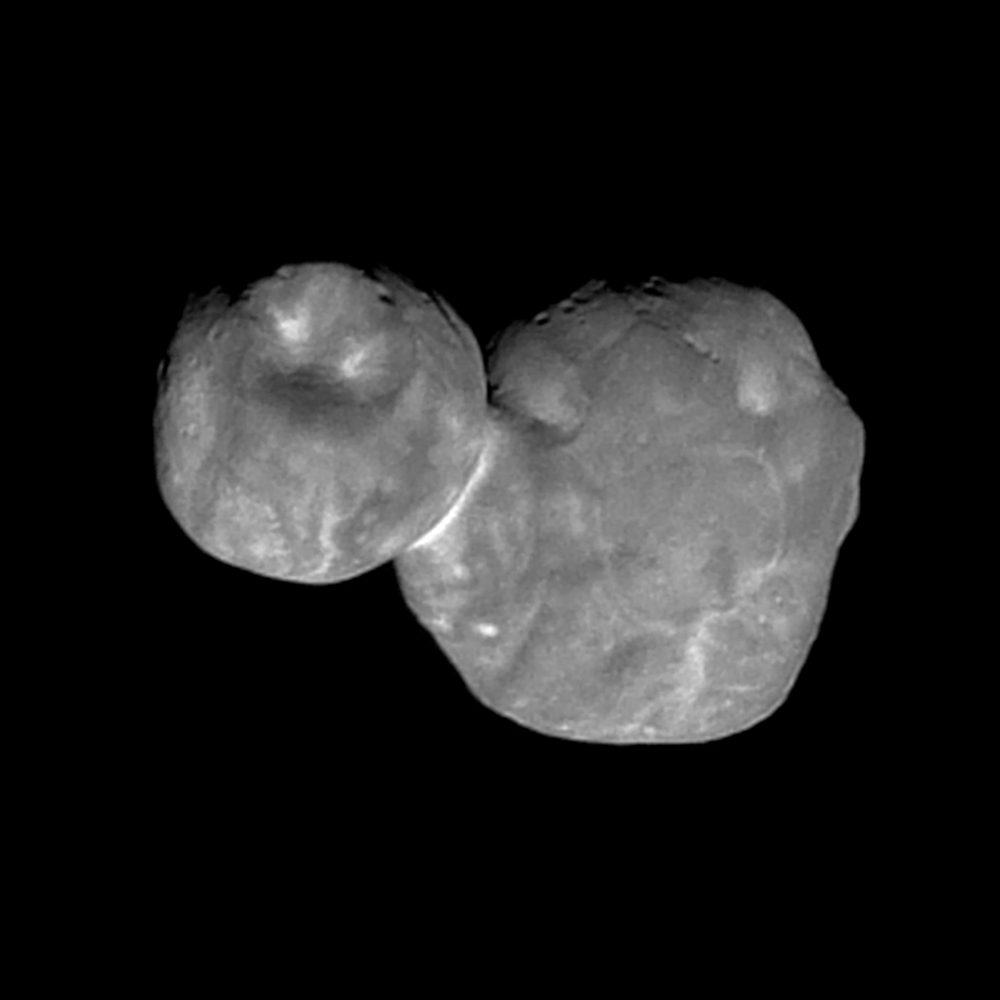
The most distant object ever visited, a contact binary in the Kuiper belt, found by dedicated Hubble searching after launch because no suitable target was known when the spacecraft left Earth. It showed two lobes that had come together gently, supporting a slow accretion model of how planetesimals formed.

The target’s ephemeris was built after launch from Hubble astrometry and stellar occultation chords, and the aim point carried that uncertainty honestly. Navigating to an object this poorly known was the encounter’s quiet achievement.

NASA Science, New Horizons

Arrokoth, January 2019, the most distant object ever visited. NASA/JHUAPL/SwRI.

T minus 00:01:00   CURRENT

Flying now

Flyby missions currently in flight, several of which will not reach their main target for years yet.

2018 onward

the Sun and Venus

Parker Solar Probesuccess

Seven Venus flybys used to progressively lower its perihelion, taking it inside the solar corona. Each Venus pass is a braking manoeuvre, the opposite of the usual use, because getting close to the Sun means shedding orbital energy rather than gaining it.

Reaching the Sun is harder, in energy terms, than leaving the solar system, because Earth’s orbital speed must be cancelled rather than added to. Seven flybys shed angular momentum that no practical rocket burn could.

NASA Science, Parker Solar Probe

2021 onward

Mercury

BepiColombosuccess

Nine gravity assists at Earth, Venus and Mercury before orbit insertion in 2026. Mercury is one of the hardest destinations in the solar system for exactly this reason: arriving is easy, and stopping is not.

The trajectory only closes if the gravity assists and years of solar-electric thrust arcs work together. Mercury sits deep in the Sun’s gravity well, and the flybys exist to shrink the capture burn to something a spacecraft can carry.

ESA, BepiColombo

Nov 2023

asteroid Dinkinesh

Lucysuccess

An engineering rehearsal flyby that discovered its target has a contact binary satellite. Lucy is on a twelve-year tour to visit eight Trojan asteroids, all by flyby, sharing Jupiter’s orbit.

Rehearsing against a live target checks terminal tracking, pointing and sequencing at real closing rates, which no simulation fully reproduces. That the rehearsal also produced a discovery is the flyby economy in miniature.

NASA Science, Lucy

Aug 2024

the Moon and Earth

JUICEsuccess

The first lunar-Earth gravity assist ever flown, a double pass in a single day, saving a large amount of propellant on the way to Jupiter in 2031.

Stacking two assists a day apart multiplies the effect and tightens the error budget, because the lunar pass had to be accurate enough to keep the Earth pass on target with little time to correct. The saving is propellant JUICE will spend at Jupiter instead.

ESA, JUICE

2024 onward

flybys as the mission itself

Europa Clipper

The largest planetary spacecraft NASA has flown left in October 2024 and used a Mars flyby within six months. At Jupiter from 2030 it will not orbit Europa at all: the radiation there would destroy it, so the mission is nearly fifty Europa flybys from Jupiter orbit, ducking in and out of the worst of the belt.

The tour turns radiation dose into a design variable. Brief dips collect the Europa data and long arcs outside the belts keep the accumulated dose survivable, giving years of science an orbiter’s electronics could never live through.

NASA Science, Europa Clipper

2024 onward

returning to a moved asteroid

Hera

ESA’s follow-up to the DART impact launched in October 2024, took a Mars gravity assist in 2025, and arrives at Didymos in late 2026 to survey the crater and the changed orbit the impact left. Planetary defence as a before-and-after experiment.

DART measured the deflection; Hera measures the mass, the crater and the interior that were actually moved. Without the second spacecraft, the momentum transfer efficiency that planetary defence calculations need would remain a model.

ESA, Hera

T minus 00:00:40   WHAT IT MEANS

What a flyby can and cannot do

What it gives you

  • Reach. Anywhere a trajectory passes, at no propellant cost.
  • Multiple targets from one launch, as Voyager 2 and Lucy show.
  • Speed, when the assist is the point rather than the observation.
  • A first look that tells you whether an orbiter is worth funding.

What it costs

  • One attempt. No repeat, no extension, no second chance.
  • Hours of science after years of cruise.
  • No supervision. The light delay means the sequence runs alone.
  • Partial coverage. You see the hemisphere you happened to pass.

The moment a mission stops flying past and starts approaching, it becomes a relative navigation problem. Rosetta at a comet and OSIRIS-REx at an asteroid were solving very nearly the same problem as a servicing vehicle in geostationary orbit, with worse light and a longer signal delay.

That approach problem is what we work on. Our capabilities are here.

T minus 00:00:20   SOURCES

Where this comes from

NASA, Voyager mission

NASA, New Horizons

NASA, Parker Solar Probe

NASA, Lucy

NASA Space Science Data Coordinated Archive, Mariner 10

Vallado, David A. Fundamentals of Astrodynamics and Applications. 4th ed. Microcosm Press, 2013, on gravity assist and patched conic design.

How the outcomes are marked

success
The mission achieved its primary objective. The spacecraft arrived, the instruments worked, and the data or the crew came home. Judged against the mission’s own stated objective, not against later ambitions: Voyager 2 at Neptune, Chang’e 5 returning its sample, Apollo 11 despite landing long of its target.
partial
The mission reached its target and returned something real, but not everything it was built for: an instrument that failed after arrival, a lander that tipped, an antenna that never opened. Galileo delivered eight years of science through a jammed antenna. SLIM landed on its nose with its precision objective met. Philae bounced twice and still worked from shadow.
failed
The mission did not achieve its primary objective: it never arrived, it crashed, or it arrived unable to work. DART colliding with the satellite it came to inspect, Luna 25 into the surface, IM-2 on its side in shadow with no power and none of its science.

What is counted: every flyby encounter listed, judged on whether the encounter returned the data it was flown for. Note how few failures there are. A flyby needs the trajectory to be right and the instruments to work for a few hours, and it never has to slow down. That is why it is the cheap option, and why it is so much more reliable than landing.

All nine topics
PreviousIn-orbit rendezvous and docking: the Gemini missions NextLunar missions, 1959 to 2000