 Final Proximity
15Lander test benches: gravity is the instrument
You cannot mock
the last ten Metres.
Landing guidance meets its truth in hardware: gantries that offload five sixths of the weight, terrestrial rockets that fly the real descent, and engines whose misbehaviour is measured, not assumed.
T minus 00:09:00 WHY LANDERS ARE DIFFERENT
The bench has to include the engine
Rendezvous benches can separate sensing from dynamics because the forces are tiny. A lander cannot: the descent is flown on a rocket engine whose dead zone, minimum impulse and throttle lag are the very things that decide whether the guidance works. Half of the modern lunar failures were sensors and software meeting terrain; the other half were propulsion behaving like hardware instead of like the textbook. A lander test programme therefore runs on three rungs: offload rigs that fake the gravity, flying testbeds that keep the real engine, and the hot-fire stand where that engine's misbehaviour is measured into numbers a guidance formulation can carry. The rungs point somewhere, so the timeline ends with the flight articles themselves: three lunar landers from the 2025 manifest whose outcomes are the exam the benches prepare for.
- ground facility
- Fixed plant that never free-flies: cables, gantries and rigs that offload gravity or deliver a vehicle to impact at known velocity, so touchdown physics can be measured without a flight. The Langley gantry in both its lives, LLRF and LandIR.
- VTVL test platform
- A rocket that takes off and lands vertically on Earth to prove descent guidance on a real engine, where a crash costs a prototype rather than a mission. Morpheus, Xodiac, Grasshopper, Colibri, BUG.
- lunar lander
- The flight article itself, flown at the Moon, where everything the benches measured is finally graded in one attempt. Blue Ghost, Resilience, IM-2.
LLRF
NASA · LangleyThe gantry that trained Apolloground facility
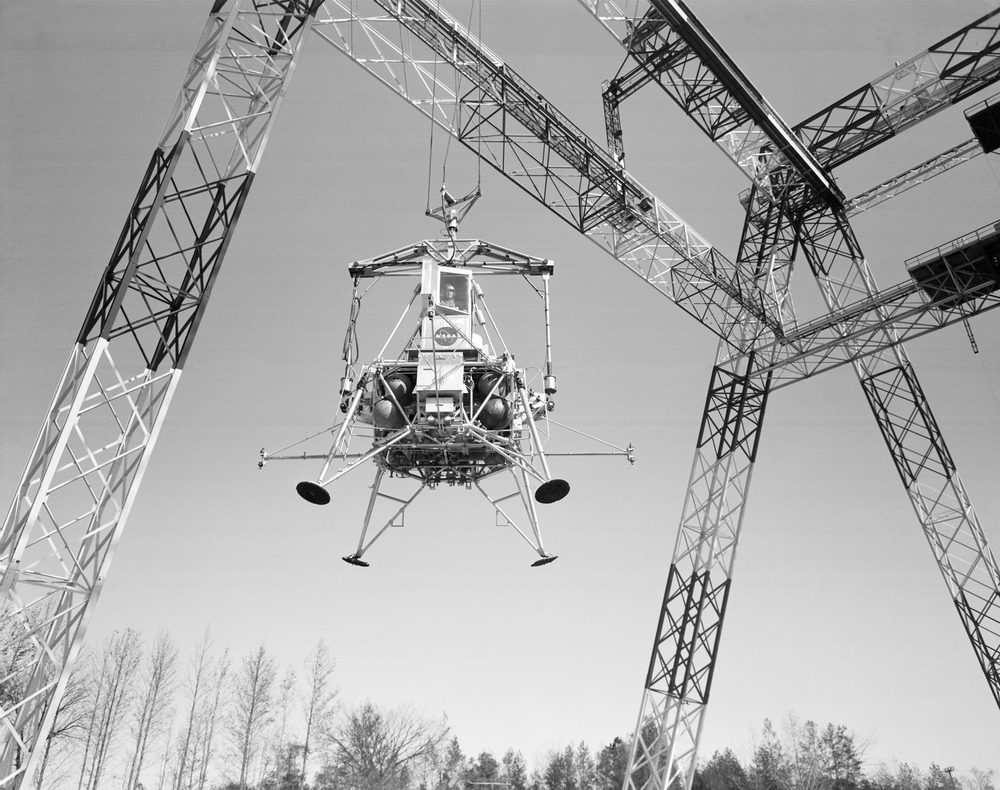
Langley’s Lunar Landing Research Facility hung a full-scale lander trainer from a 73 metre gantry whose cables carried five sixths of its weight, leaving the vehicle to fly the remaining sixth: lunar gravity, manufactured mechanically. Armstrong flew his final approaches here and at its free-flying siblings.
The offload principle survives unchanged in every modern gravity-offload rig: the cable is the Moon.
LLRV / LLTV
NASA · historicalThe flying bedsteadVTVL test platform
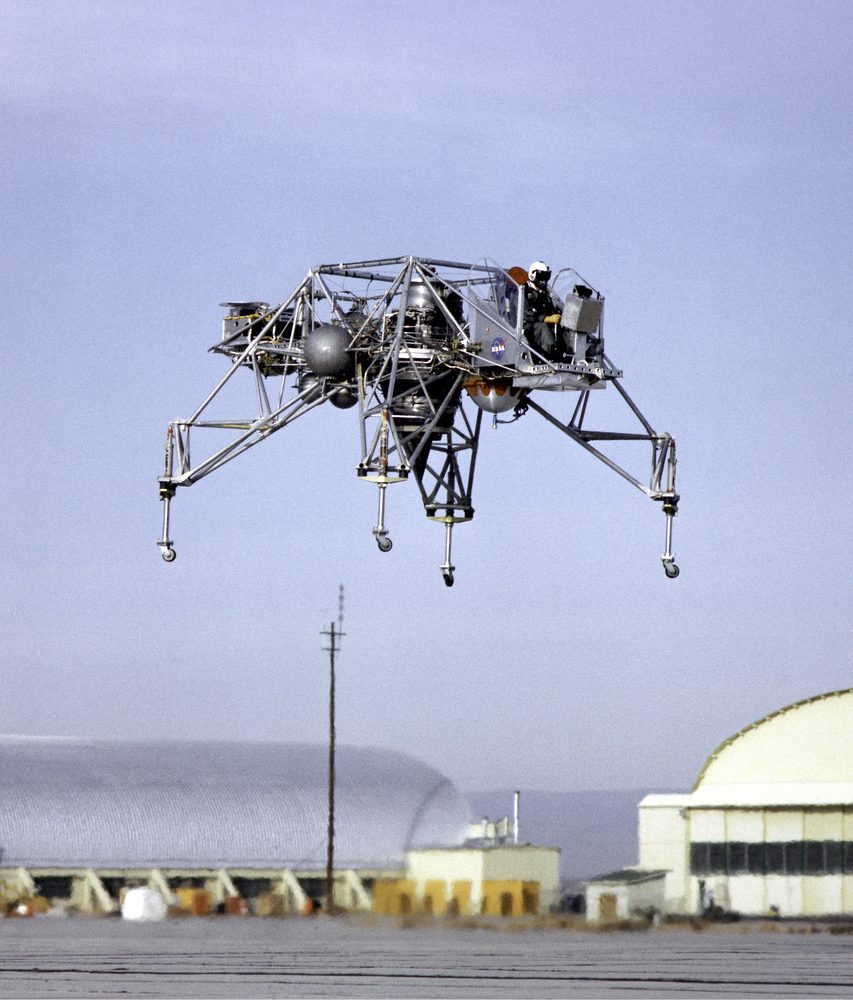
The free-flying counterpart: a jet engine mounted vertically cancelled five sixths of the vehicle’s weight while lift rockets flew the lunar remainder. It was genuinely dangerous, Armstrong ejected from one, and the astronauts judged it irreplaceable: the only place on Earth that flew like the LM.
The lesson outlived the vehicle: simulation fidelity is judged by the pilot in the loop, and the crews rated the risk worth taking because nothing else was honest.
LandIR
NASA · LangleyThe gantry’s second lifeground facility
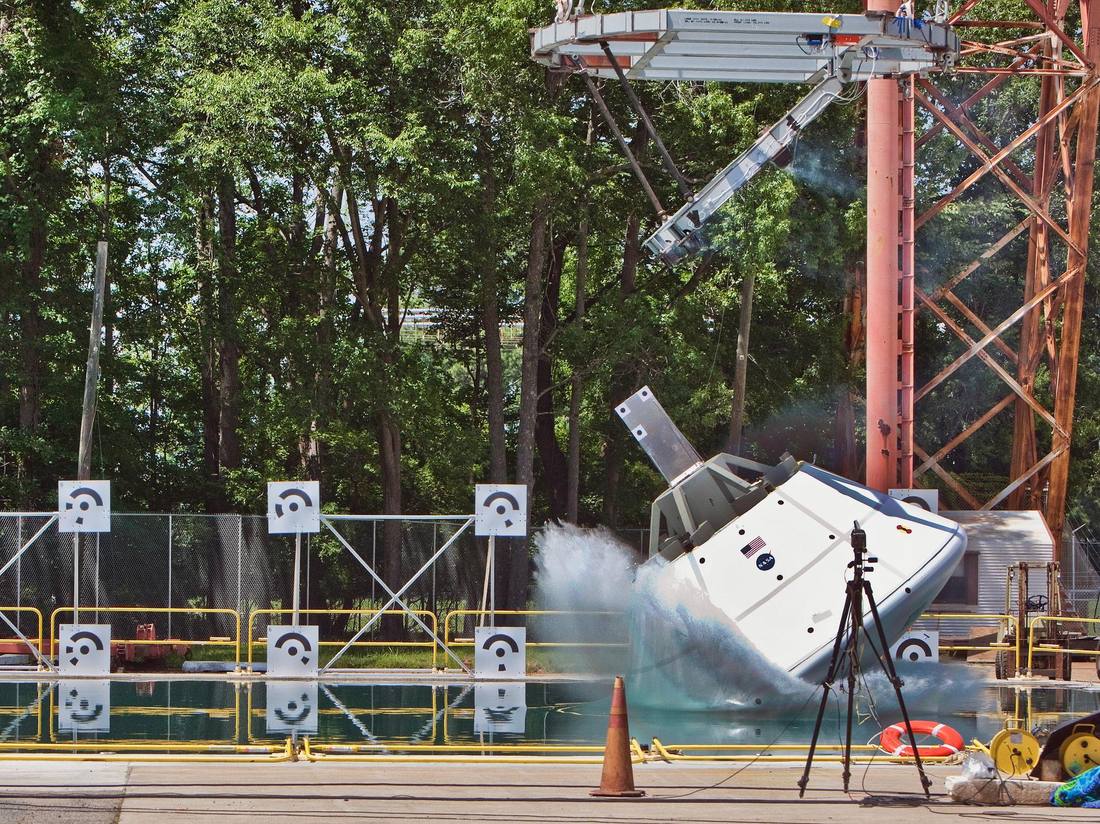
The Apollo gantry never retired. Renamed the Landing and Impact Research Facility, the 73 metre A-frame now swings full-scale vehicles into soil and water to measure what touchdown does to structures and the people inside them. A hydro impact basin, 35 by 27 metres and six deep, was completed beneath it in 2011, and the Orion boilerplate capsules dropped there anchored the structural loads models for crewed splashdown; the cables that once faked lunar gravity now deliver aircraft, rotorcraft and capsules to impact at precisely known velocity and attitude.
A swing drop is guidance solved by geometry: release height and cable length fix the impact velocity vector exactly, with no controller in the loop to argue about, which is why a sixty year old gantry still produces the cleanest touchdown data in the agency.
DC-X / DC-XA
SDIO / NASA · White SandsVertical landing, thirty years earlyVTVL test platform
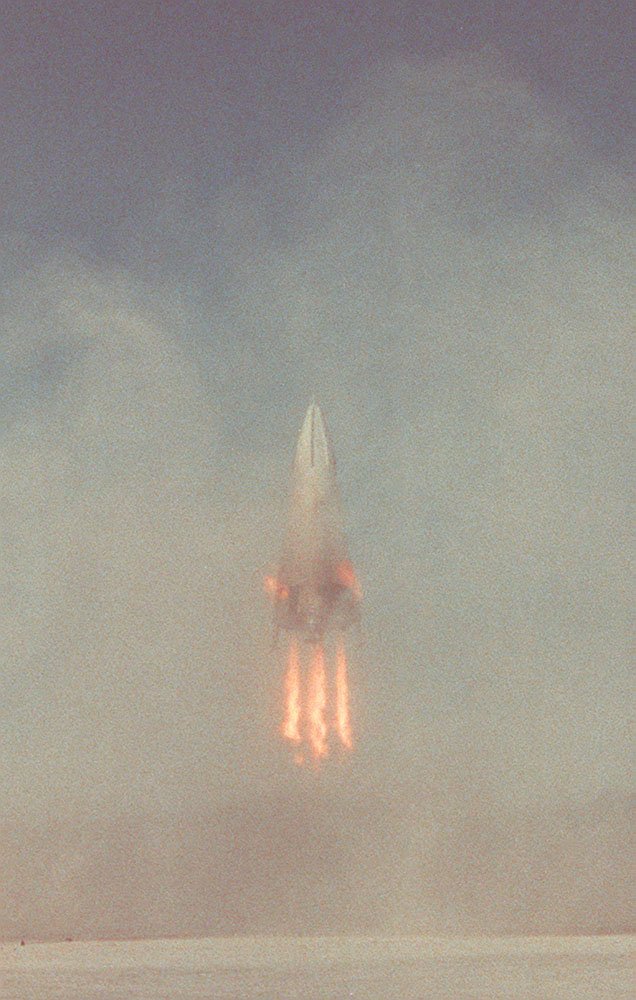
McDonnell Douglas’s Delta Clipper Experimental first flew at White Sands on 18 August 1993: a twelve metre single stage that rose, translated sideways and settled back onto its tail 59 seconds later, built for the Strategic Defense Initiative Organisation as the opening argument for reusable rockets. NASA rebuilt it as the DC-XA, which in the summer of 1996 turned a vehicle around between flights in 26 hours, then lost it on its fourth flight when one landing strut failed to extend and the toppled airframe burned on the pad.
The investigation traced the fire to a single unconnected helium line, and the lesson has outlived the vehicle: reusability is an operations problem, and a landing leg is as mission-critical as the engine it stands under.
Mighty Eagle
NASA · MarshallThe peroxide hover labVTVL test platform
Marshall’s three-legged prototype, built with the Johns Hopkins Applied Physics Laboratory, flew hydrogen peroxide thrusters through three seasons of tethered and free flights from 2011 to 2013: hovering at nine metres, climbing to thirty, and descending to land on a pad target its own camera had found, with the guidance software swapped out between campaigns. Its final flights in November 2013 validated Moon Express’s landing GNC, commercial software flying on a government testbed.
Warm monopropellant was the cadence decision: no cryogenics and no combustion instability to chase, so the vehicle could fly again within days, and a testbed’s worth is measured in flights per month rather than in thrust.
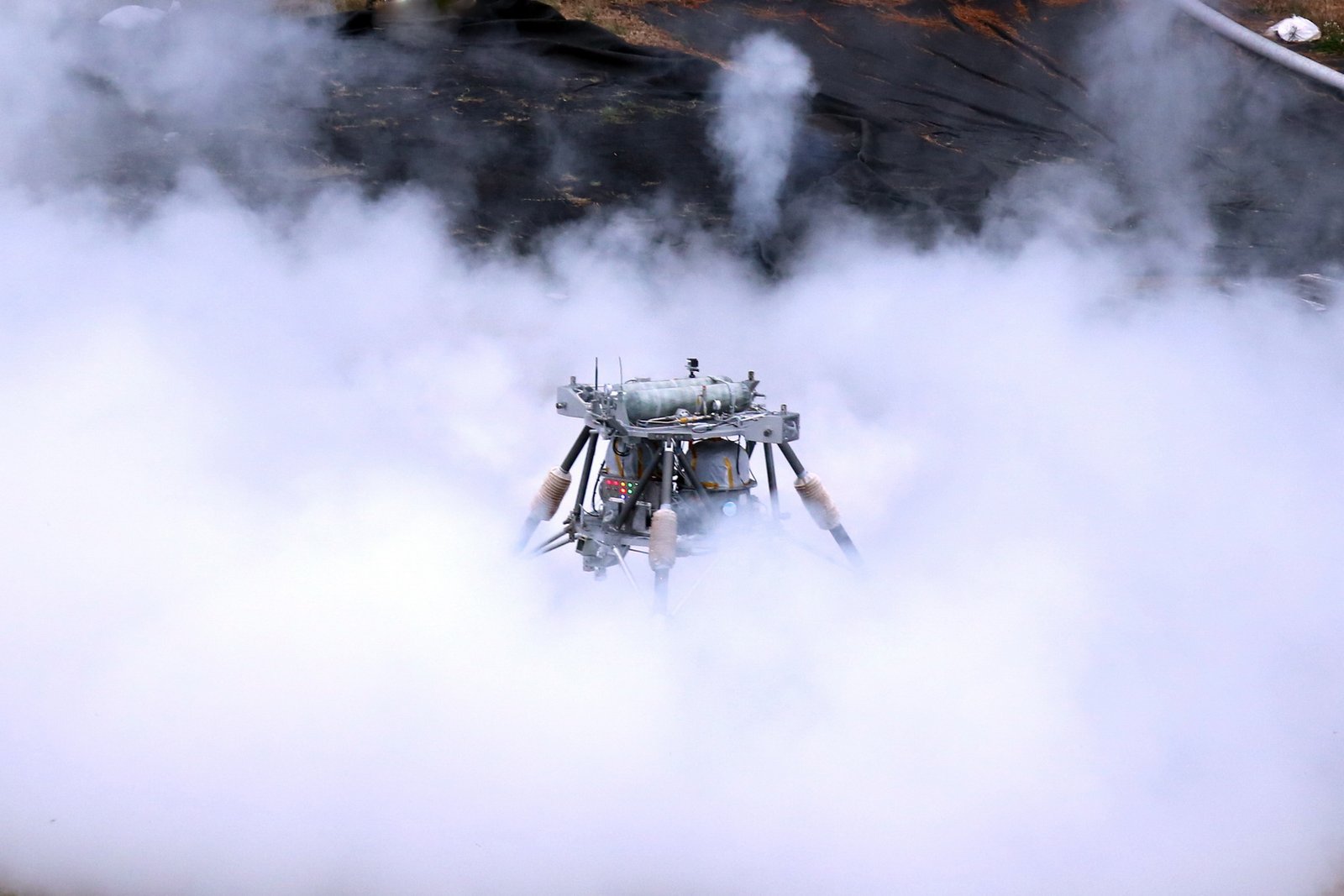
Morpheus
NASA · KSCFree flight over a hazard fieldVTVL test platform
Project Morpheus flew a methane lander, 1,050 kilograms wet on a 20 kilonewton engine, over a constructed field of rocks and craters at Kennedy, with the ALHAT sensor suite finding safe sites in real time during descent. Flights ended with autonomous divert and touchdown, the full closed loop, in Earth gravity, on a real engine.
One vehicle was lost early in the campaign, which is half the point of flying testbeds: the crash cost a prototype, not a mission.
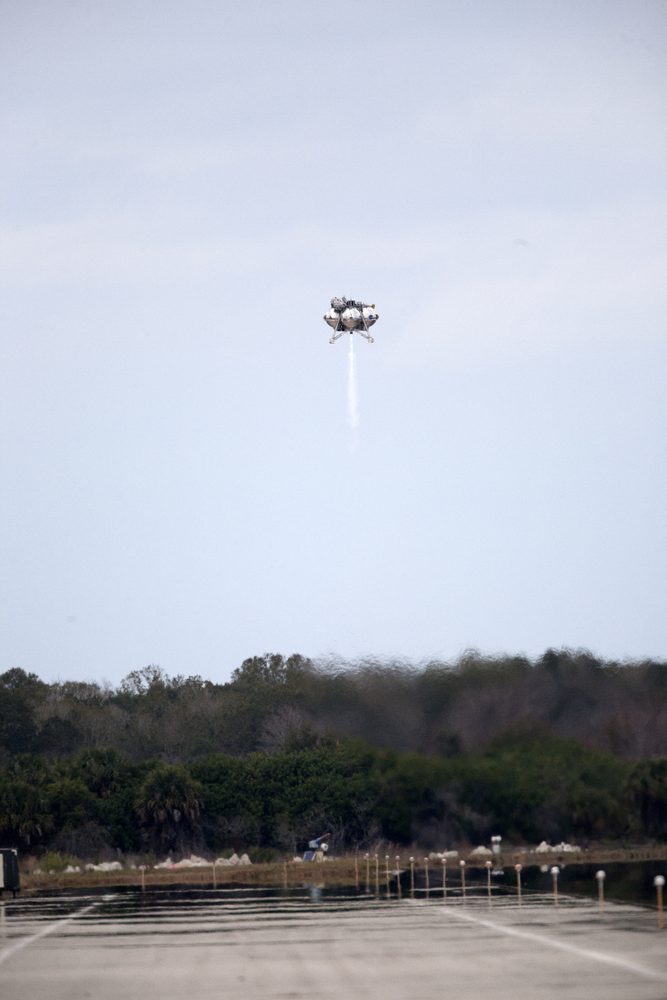
Xombie
Masten · MojaveThe rocket you could rentVTVL test platform
Masten’s VTVL vehicles flew guidance experiments for hire, most famously the flight tests of G-FOLD, the convex powered-descent guidance, which diverted hundreds of metres mid-flight under algorithm command in 2012 and 2013.
Those flights mark the moment convex descent guidance stopped being a paper result: the mathematics of topic 4 first flew here, on a rented rocket over the Mojave.
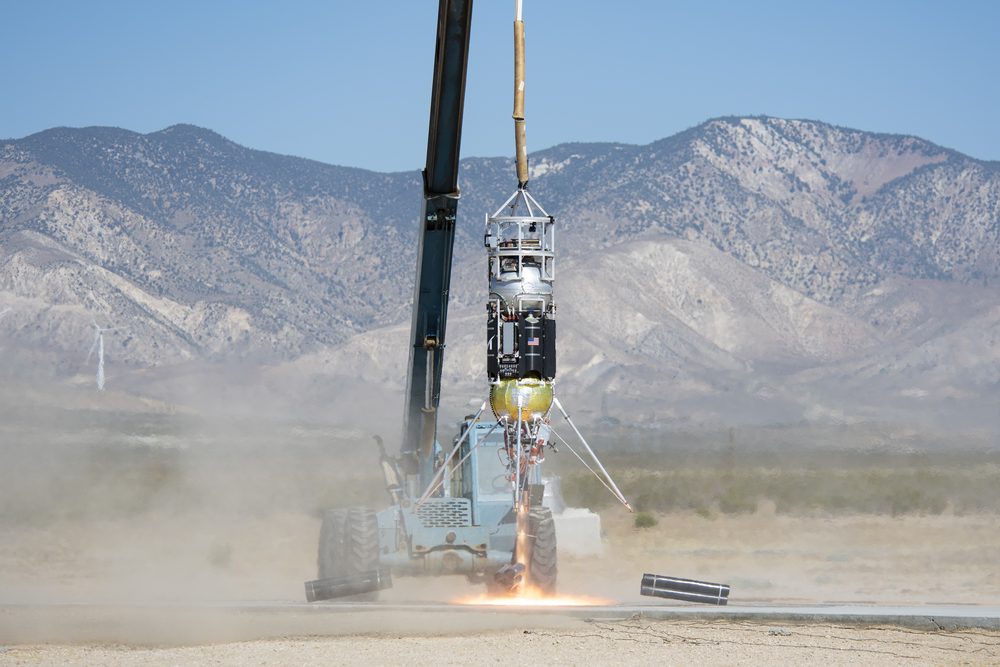
Grasshopper
SpaceX · McGregorRoutine, manufactured in TexasVTVL test platform
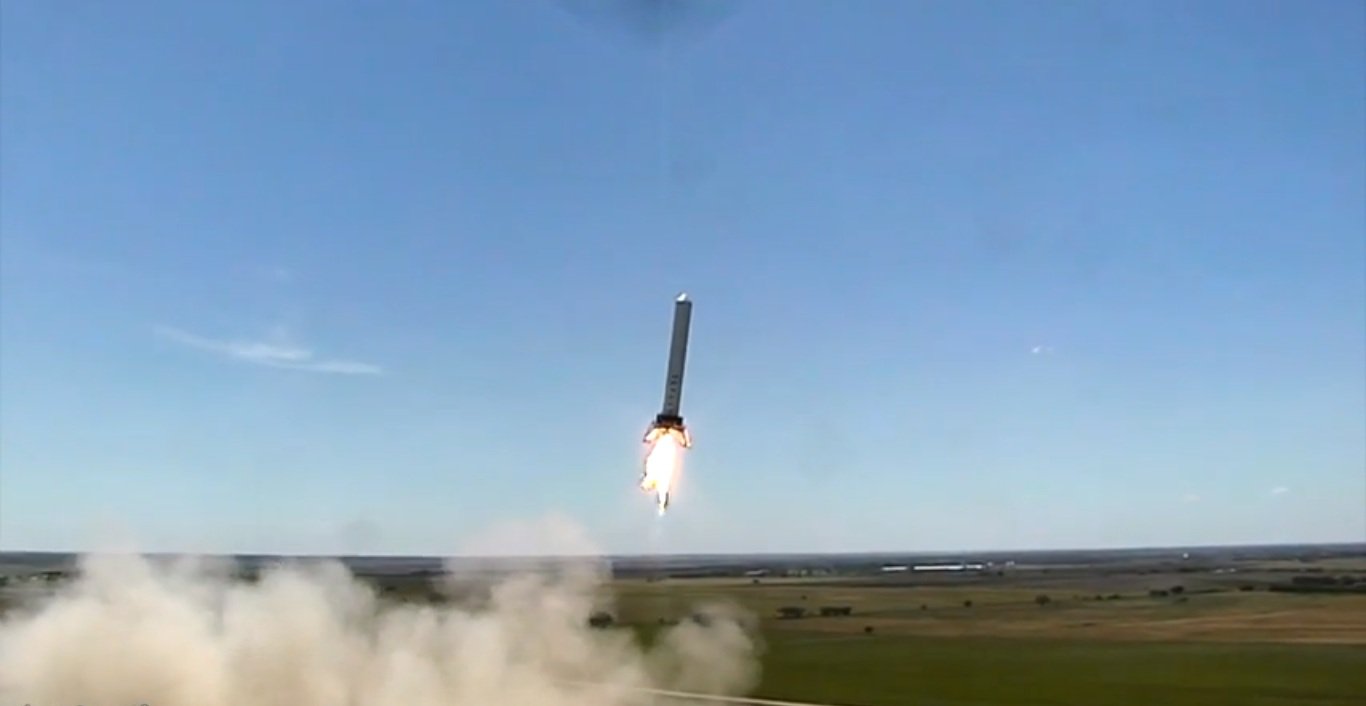
SpaceX’s Grasshopper, a Falcon 9 first-stage tank on fixed steel legs, flew eight times from McGregor between September 2012 and October 2013: a three second hop first, 744 metres on the final flight, every one of them ending back on the pad, including a lateral divert flown and reversed under guidance. Its successor F9R Dev1 stretched the campaign to the kilometre class in 2014 before its flight termination system ended a test over the same field; the descent both vehicles rehearsed then moved onto returning orbital boosters and became a schedule item.
The campaign’s product was statistics rather than records: by the time a booster tried the manoeuvre from staging velocity, the last hundred metres had been flown often enough to be boring, which is the condition every bench on this page works towards.
Xodiac
Masten / Astrobotic · MojaveThe lander with a flight manifestVTVL test platform
Xombie’s successor turned the rented rocket into a scheduled service: Masten’s fifth-generation VTVL vehicle, 3.5 metres tall with a 3.2 kilonewton engine, has logged over 160 flights from Mojave, carrying NASA Flight Opportunities payloads through real descent profiles. Psionic’s navigation doppler lidar measured its first landing trajectories aboard it in September 2020, the PlanetVac sampler took its first touchdown samples on its deck, and after Masten’s 2022 bankruptcy the vehicle kept flying under Astrobotic, hovering for plume-surface interaction studies and night landing sensor trials.
The value is not any single flight but controlled repetition: a descent profile that can be booked like tunnel time, with plume, dust and vibration included, none of which a simulation prices correctly.
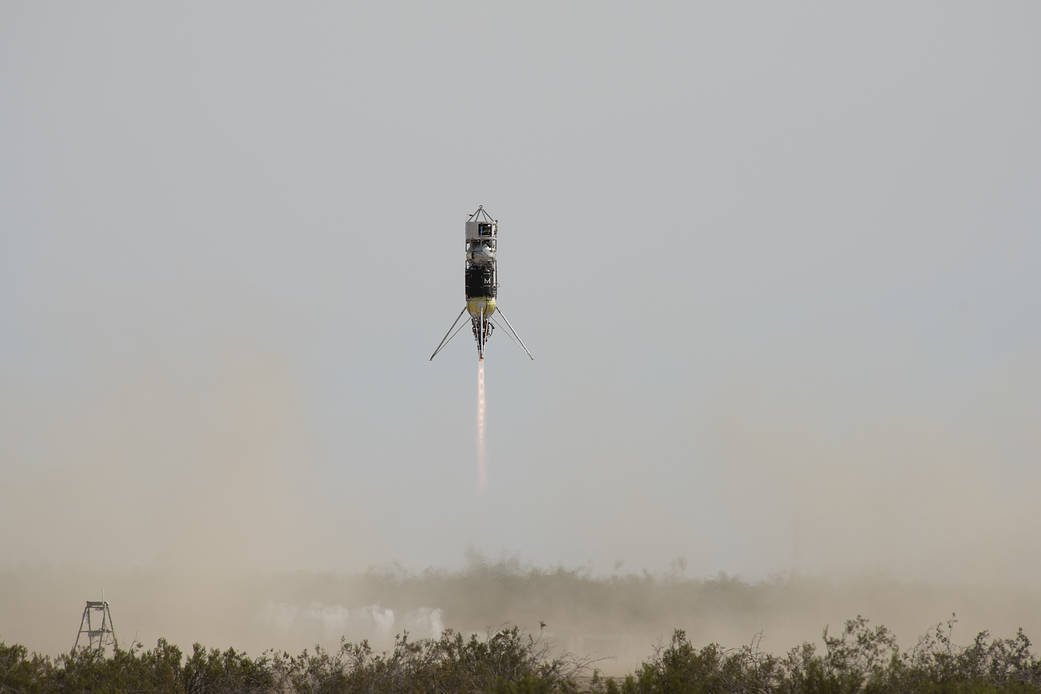
EAGLE
DLREurope’s tethered hover labVTVL test platform
DLR’s EAGLE testbed flies a rocket-style thrust-vector vehicle in controlled tethered hops, giving European landing GNC a hardware loop between simulation and any flight opportunity, alongside the TRON optical hall that handles the navigation half.
The pairing is the method: TRON exercises the eyes, EAGLE the muscles, and a landing needs both proven before they meet in one vehicle.
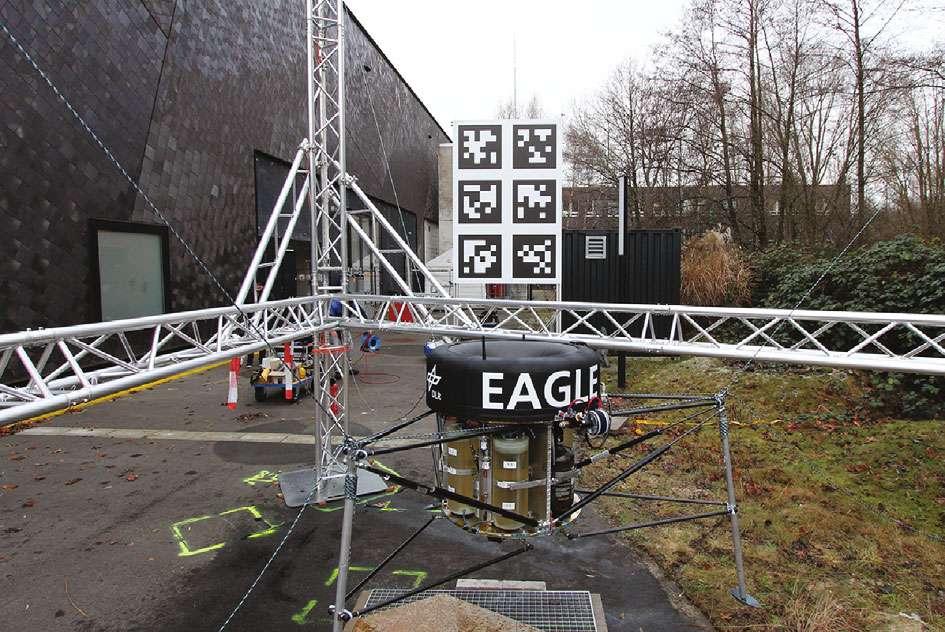
Colibri
Gruyère Space Program · EPFLStudents fly Europe’s first free hopperVTVL test platform
The Gruyère Space Program, a student association founded at EPFL, built the Colibri hopper around its own bipropellant engine and flew it 53 times in 2024, finishing on 18 October with the flight the team had promised from the start: up to 105 metres, 30 metres sideways, and back onto the pad, the first free flight of a reusable rocket hopper in Europe. Roughly two and a half metres tall on a two metre footprint, Colibri lifts off with a thrust to weight ratio of barely more than one, and the whole programme cost under 250,000 Swiss francs.
Lift-off at a ratio just above unity leaves the engine nowhere to hide: every gram of growth and every millisecond of throttle lag shows in the trajectory, which is exactly the discipline a landing demonstrator exists to impose.
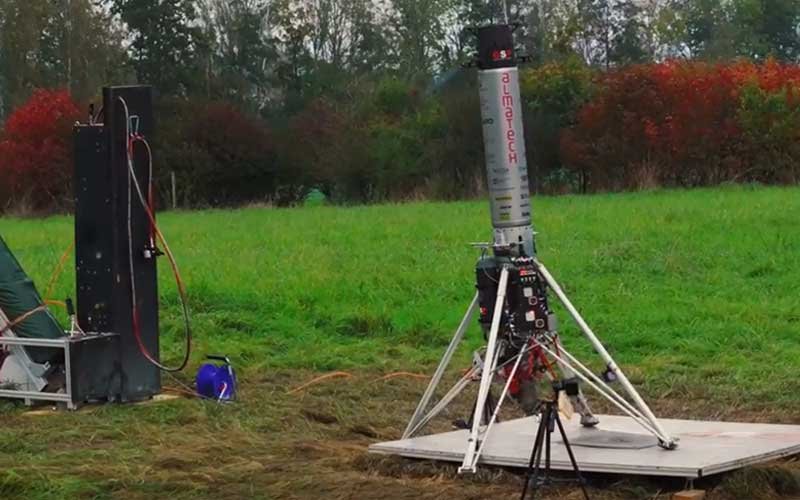
Blue Ghost
Firefly · NASA CLPSThe first clean commercial landinglunar lander
Firefly Aerospace’s Blue Ghost set ten NASA payloads down in Mare Crisium on 2 March 2025, inside its 100 metre target beside Mons Latreille, the first fully successful commercial lunar landing, and then worked through a full lunar day and five hours into the night. The geometry says a lot: 2.0 metres tall on a 3.5 metre footprint, an aspect ratio of 0.57, the only lander in the RAST comparison table squatter than BUG’s 0.60, descending on engines in the 1.0 to 1.6 kilonewton class.
The one modern lander built squatter than a test platform is also the one that stayed exactly where it stopped. Geometry is not the whole story of a stable touchdown, but it is the cheap part, and it is decided years before the descent.
Firefly Aerospace, first commercial company to land on the Moon
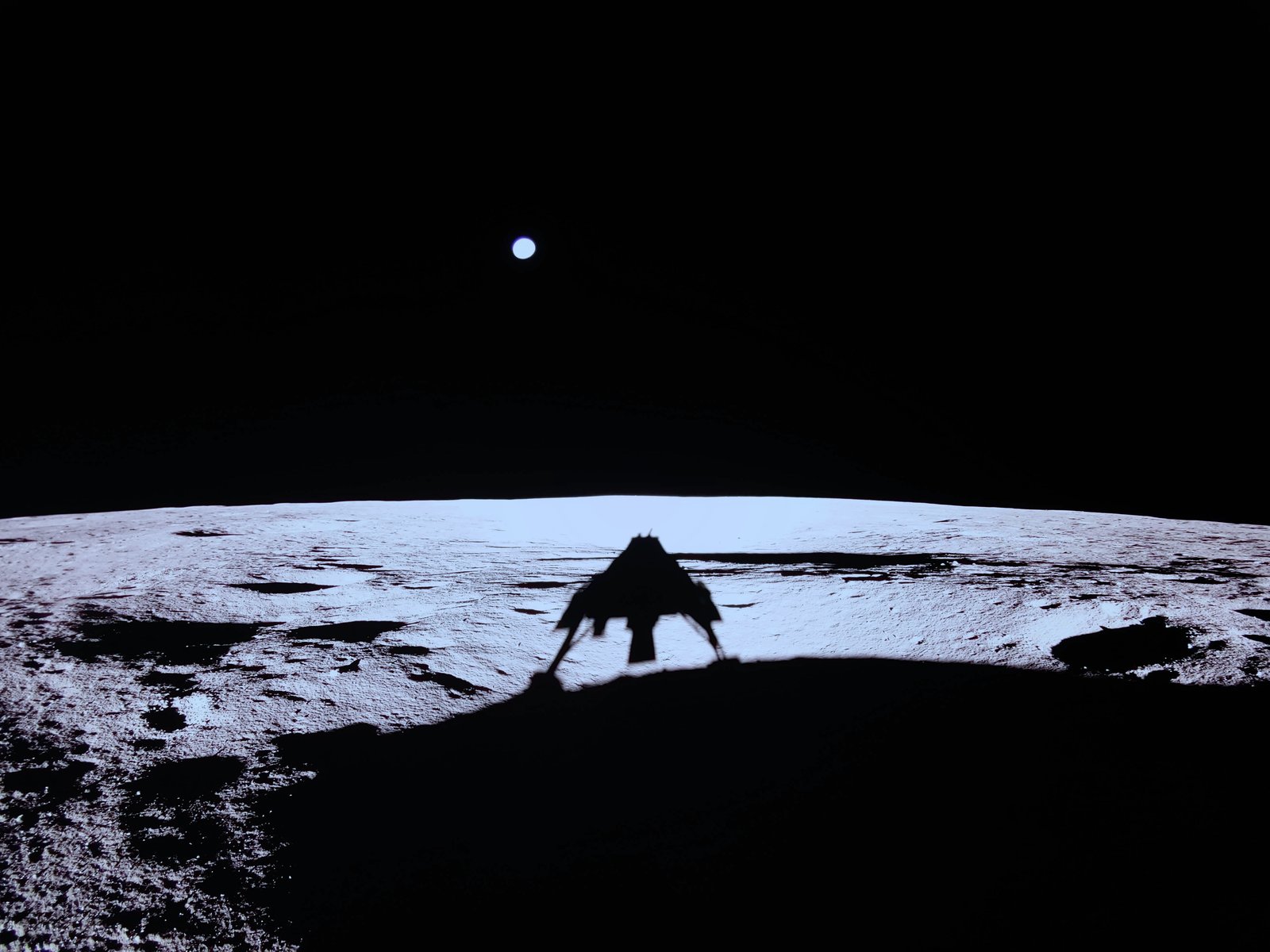
Resilience
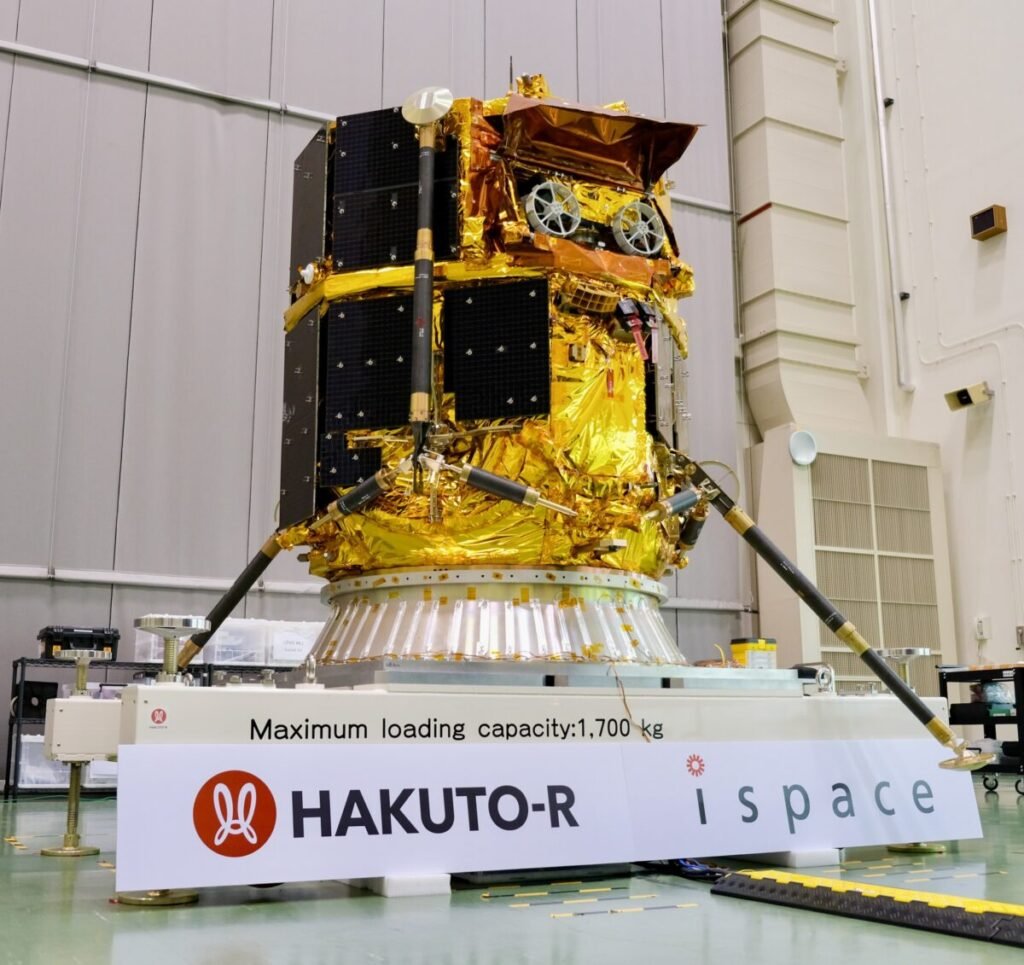
ispace · HAKUTO-R M2The measurement that arrived latelunar lander
ispace’s second HAKUTO-R lander, Resilience, 2.3 metres tall on a 2.6 metre footprint behind a 0.4 kilonewton main engine, the gentlest thrust in the comparison table, began its final descent to Mare Frigoris on 5 June 2025 and struck the surface before it could slow down. The company’s own analysis is unusually exact: the laser rangefinder was meant to start returning altitude from three kilometres up, delivered its first valid measurement below 900 metres, and left the guidance no time to shed the remaining speed. The software and the propulsion system were cleared; the sensor’s performance had degraded between the bench and the Moon.
A sensor that passes every ground test and then drifts in flight is the hardest failure the bench world has to answer, because the one measurement that matters is the one you cannot rehearse at full scale: range to an approaching lunar surface.
IM-2
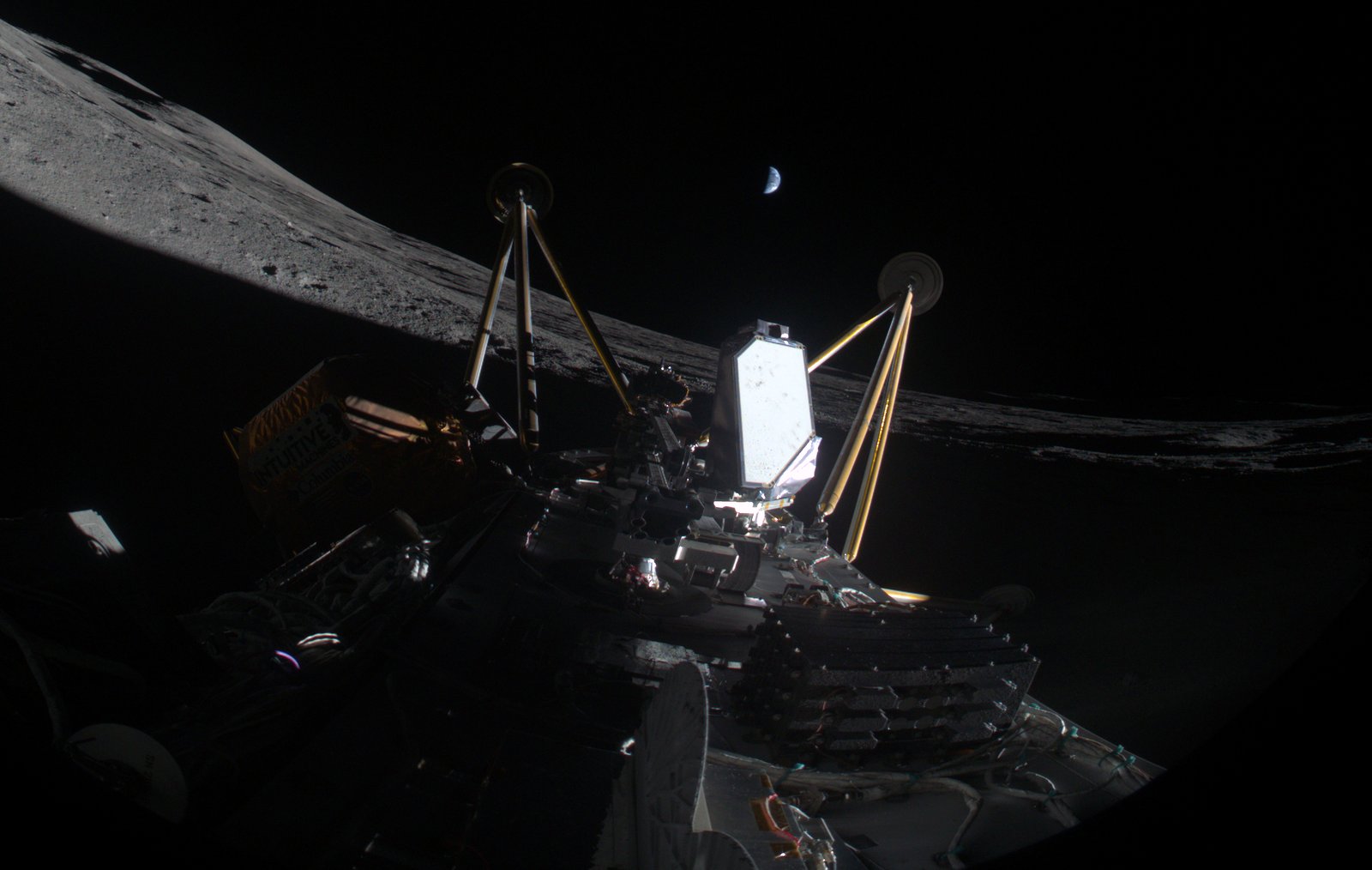
Intuitive Machines · NASA CLPSTall, narrow, and on its sidelunar lander
Intuitive Machines’ Athena reached the Mons Mouton region on 6 March 2025, the southernmost lunar landing yet attempted, then came to rest on its side in a small crater about 250 metres from its aim point, and ended its mission when the mispointed panels could no longer feed the batteries. Its proportions sit at the far end of the comparison table from BUG: 4.0 metres tall on a 2.5 metre footprint behind a 3.1 kilonewton methalox engine, an aspect ratio of 1.60 against BUG’s squat 0.60, the tallest and narrowest vehicle in the table.
Both Nova-C landers to reach the Moon have finished on their sides, IM-1 in 2024 and Athena in 2025. A tall, narrow lander buys packaging efficiency inside the fairing and pays for it at the one moment the mission exists for; a wide, low airframe is the same trade taken the other way.
NASA, data received before Intuitive Machines ends lunar mission
BUG
TURKUZAYSANThe demonstrator the numbers buildVTVL test platform
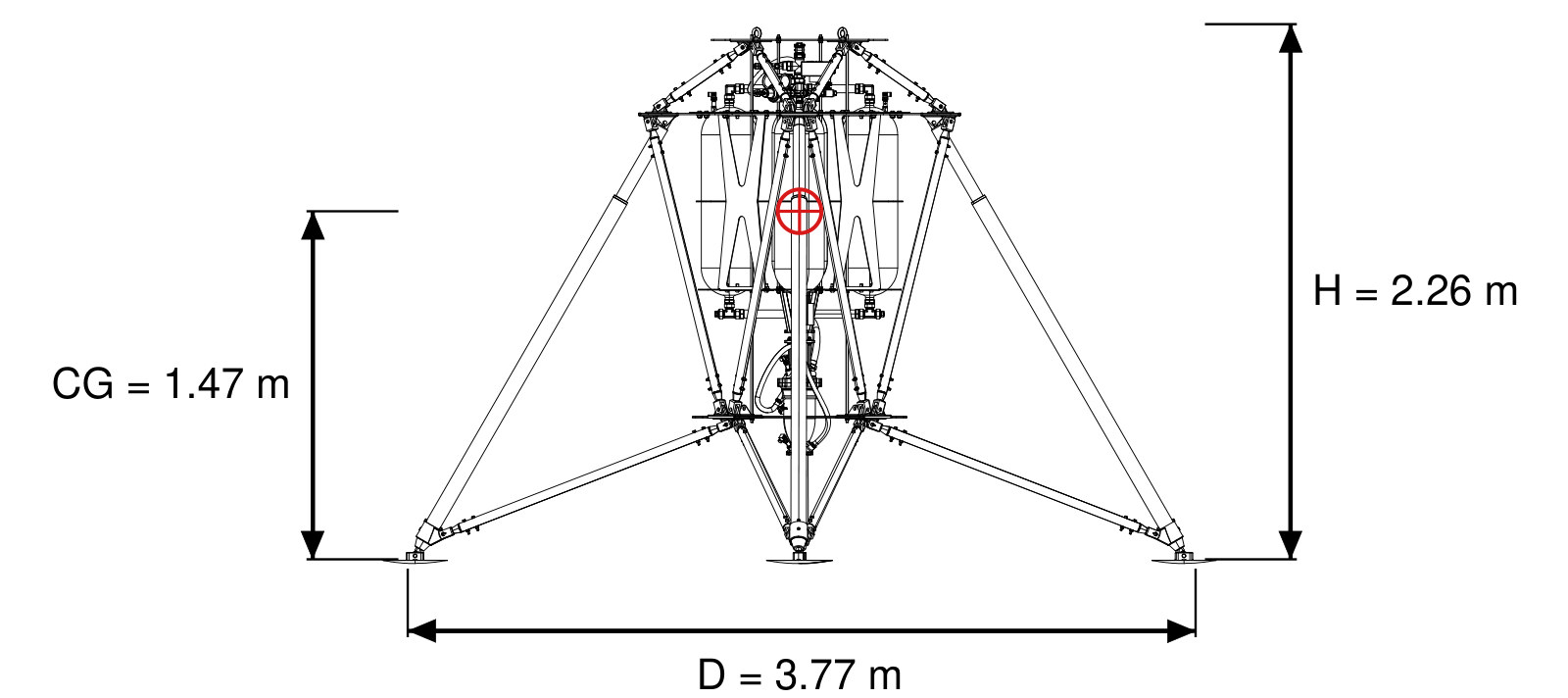
The BUG vehicle, TURKUZAYSAN’s four-legged truss lander, 2.26 metres tall on a 3.77 metre footprint, is designed in one loop with its throttleable bipropellant engine and its guidance: sixteen hot-fire campaigns, 1,260 to 5,630 newtons, feed the engine’s dead zone and throttle limits into the convex descent formulation as measured constraints. In closed-loop Monte Carlo with successive convexification replanning, mean landing error falls from 147 metres open-loop to under 12, and the coupled analysis exposes the boundary that matters: a tilt limit near 58 degrees, set jointly by the engine’s minimum throttle, the airframe’s tilt allocation and the Moon’s gravity.
One inequality ties three teams: minimum throttle must exceed weight over the cosine of allowed tilt, or the vehicle needs coast arcs. For a 250 kg lunar lander with 30 degrees of tilt, that is roughly 610 newtons with margin. Every lander bench on this page exists to make numbers like that measured rather than assumed.
T minus 00:00:40 THE THREAD
From bench to boundary
The modern landing record, roughly half of attempts failing since 2000, is a guidance-meets-hardware record. The benches on this page are the counter-argument: measure the engine, offload the gravity, fly the algorithm on Earth until the failure modes are boring, and carry the measured numbers into the guidance as constraints rather than assumptions.
The failure statistics are counted in topic 12, the convex guidance the benches feed is topic 4, and what ground testing can and cannot prove in general is topic 8.